• Duration:29 Nights 30 Days
  • Difficulty: Very Strenuous
  • Max. Altitude: 6812m
  • Group Size: 1-6
  • Activity: Trekking / Climbing
  • Pick Up: Yes

About Island Peak and Ama Dablam Expeditions

Annapurna Foothills Treks offers a carefully structured route encompassing Gokyo Peak, Cho La Pass, Island Peak climbing, and culminating at Ama Dablam Base Camp. The Gokyo–Cho La–Island Peak route presents a demanding yet picturesque journey through the Everest region. The expedition commences in Kathmandu, where participants will spend several days preparing, resting, and acclimatizing to the altitude. Subsequently, a flight to Lukla, the principal gateway to the Everest region, marks the beginning of the trek.

From Lukla, the trek proceeds to Namche Bazaar, a well-known acclimatization stop. The journey continues onward to the scenic Gokyo Lakes, where climbers have the opportunity to ascend Gokyo Ri, offering panoramic views of Mount Everest and surrounding peaks.Following Gokyo, the route crosses the challenging Cho La Pass at an elevation of 5,420 meters before descending to the village of Dzongla. From Dzongla, the trail advances to Island Peak Base Camp, where climbers will rest and further acclimatize before attempting the summit of Island Peak.

About of Imja Tse (Island Peak)

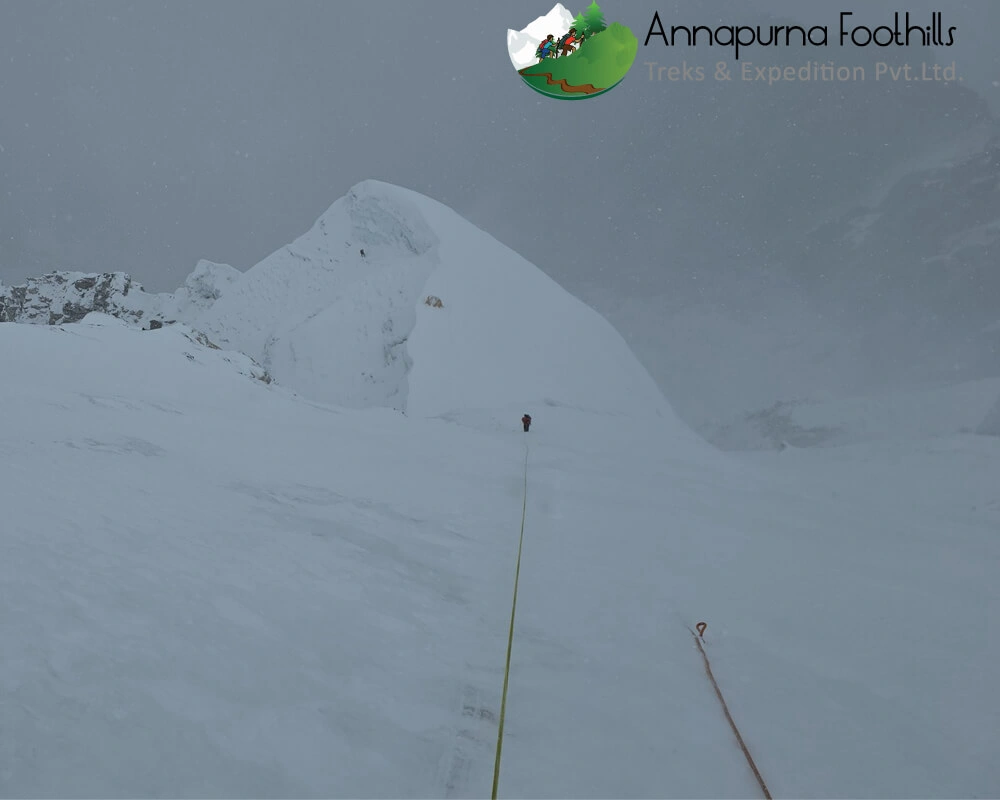
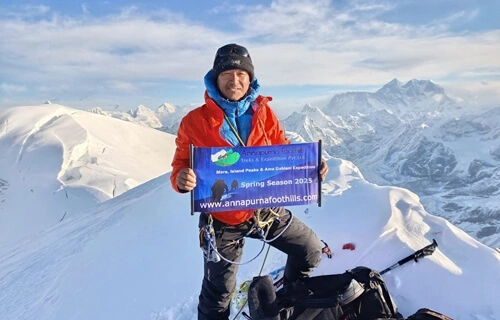
Imja Tse is also called Island Peak. It is 6,189 meters high. An English climber named Eric Shipton gave it the name “Island Peak” in 1953. He thought it looked like an island in a sea of ice when seen from Dingboche. In 1983, its official name became Imja Tse. The climb is not too hard. Beginners who are strong and fit can do it. That’s why it is one of the most popular mountains in the 6,000-meter range. Upon successfully summiting Island Peak, participants return to Base Camp and then retrace their path to the Ama Dablam Expedition Base Camp.

About of Ama Dablma Expedition

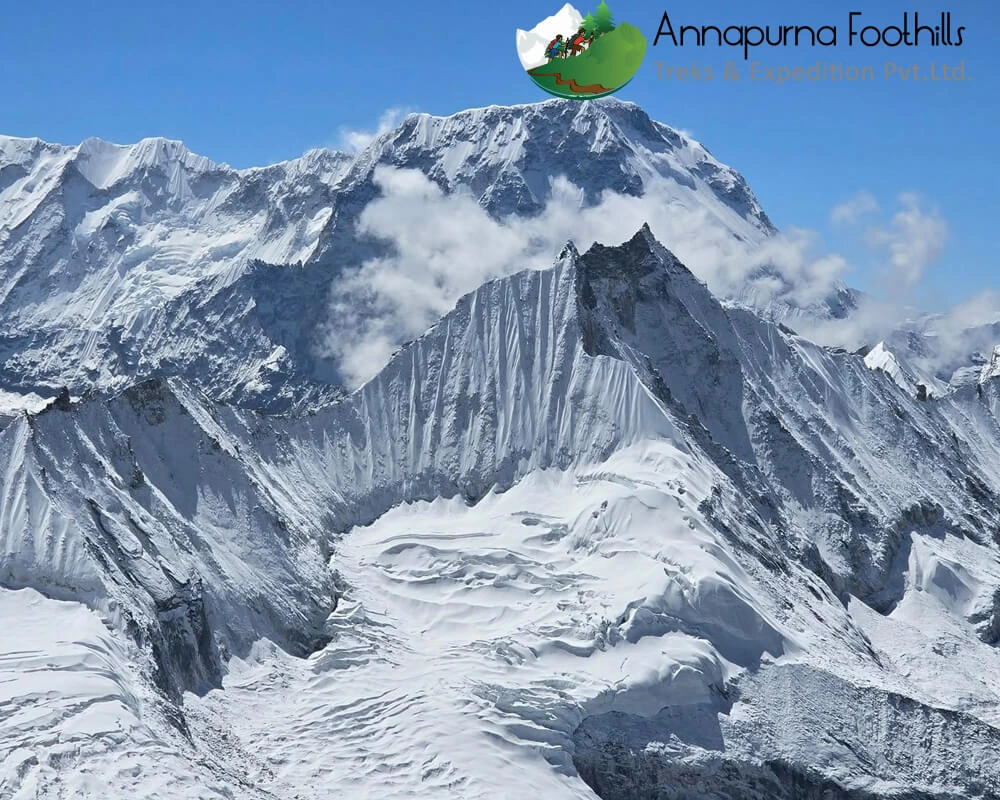
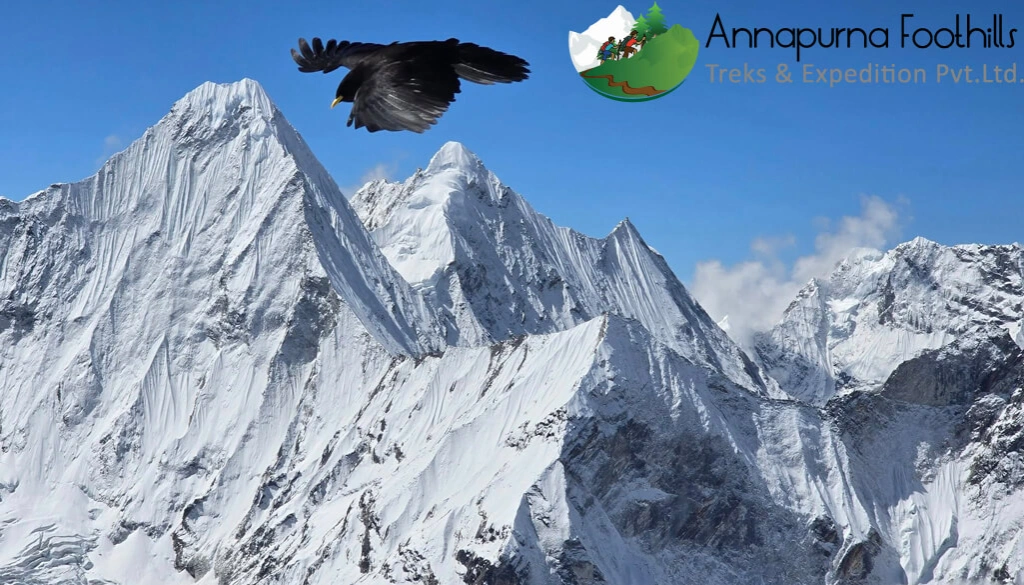
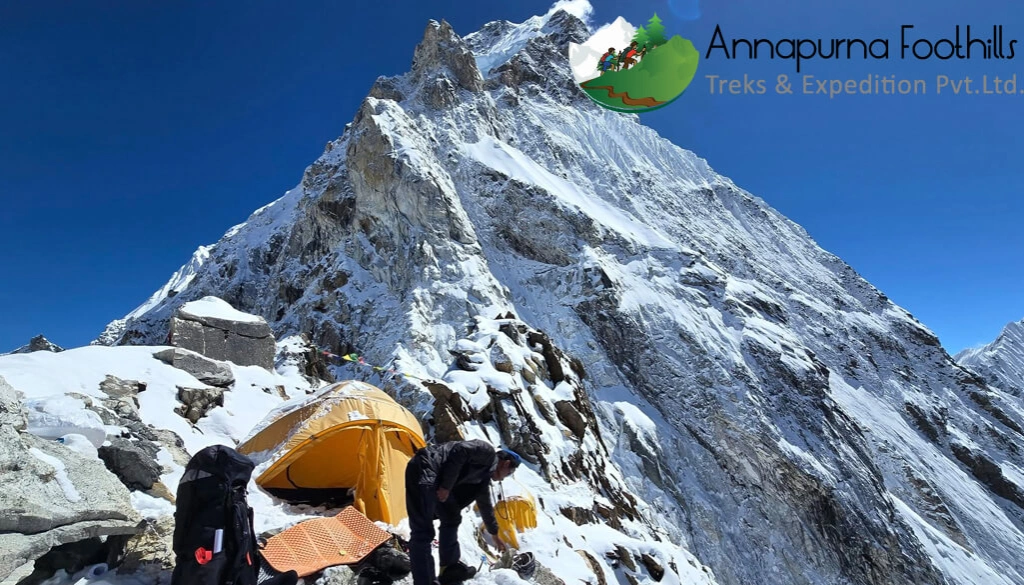
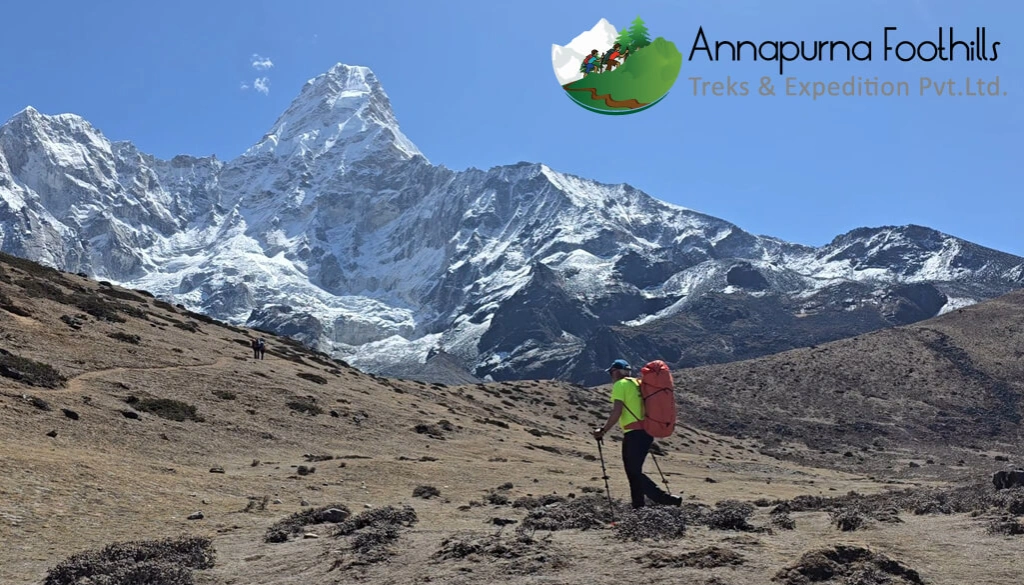
Ama Dablam is a beautiful mountain in the Himalayas. People also call it the “Matterhorn of the Himalayas.” It is in eastern Nepal. The mountain looks like a pyramid, so it is easy to spot.On one side of the mountain, there is a hanging glacier. It looks like a jewelry box called a Dablam that Sherpa women wear. Because of this, the mountain is named Ama Dablam. The name means “Mother’s Necklace.”

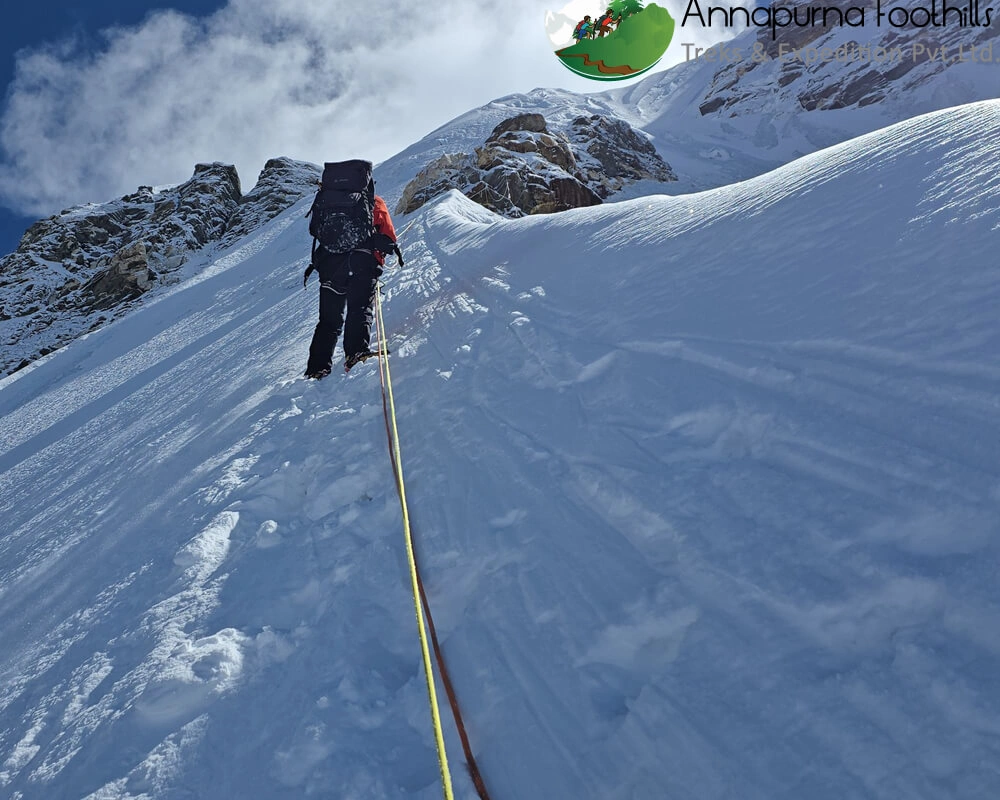
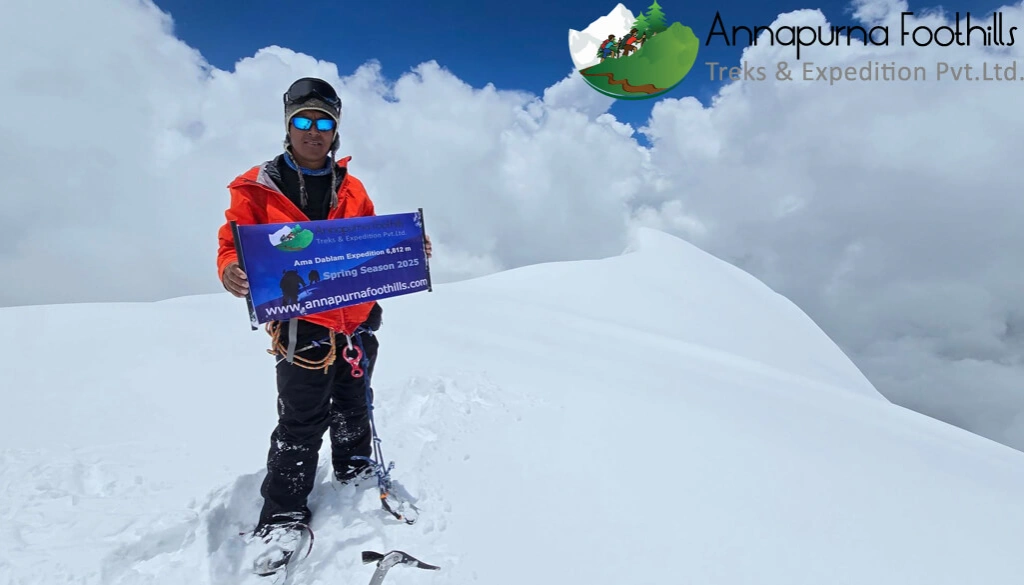
Ama Dablam is 6,812 meters tall. It is not the tallest mountain, but many people love how it looks. It is in the Khumbu region, south of Mount Everest. Climbers enjoy amazing views while going to the top.Most people climb Ama Dablam from the Southwest Ridge. This was the same path used by the first climbers in 1961. Climbers usually set up three camps on the way, near the hanging glacier.

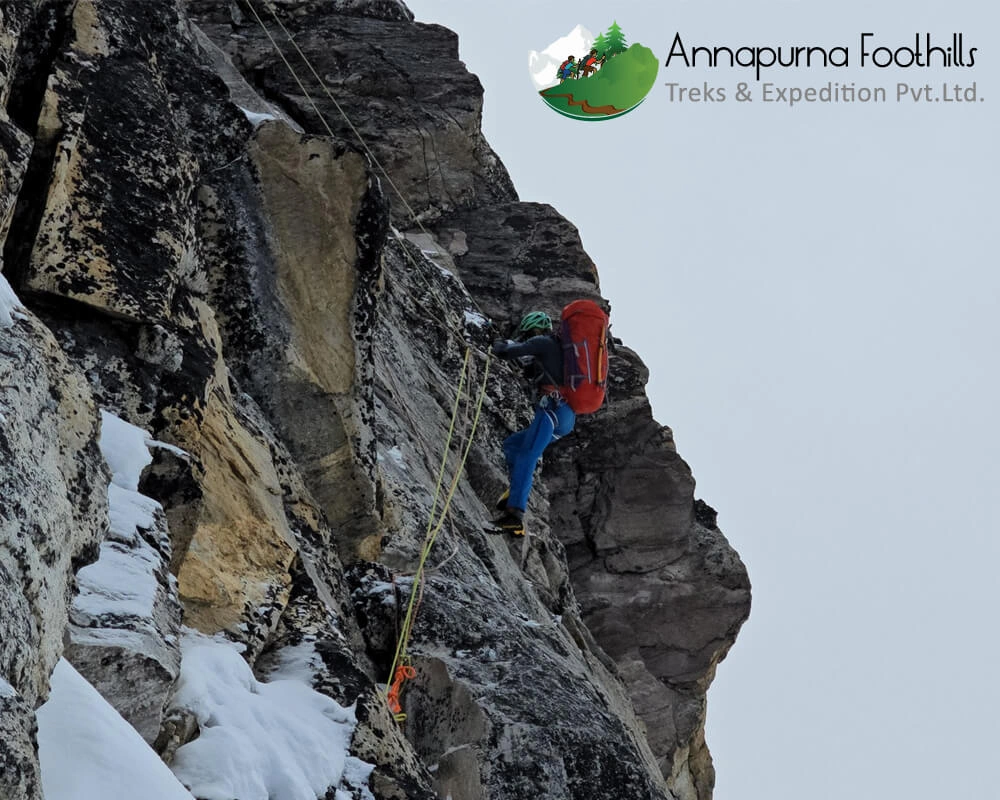
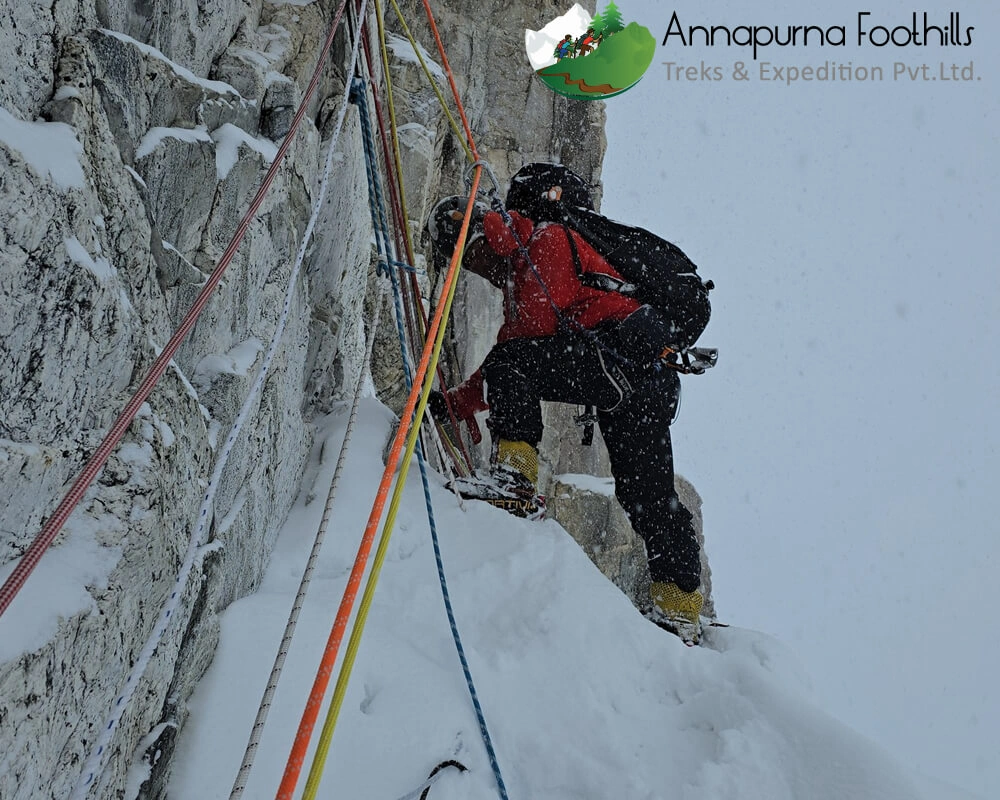
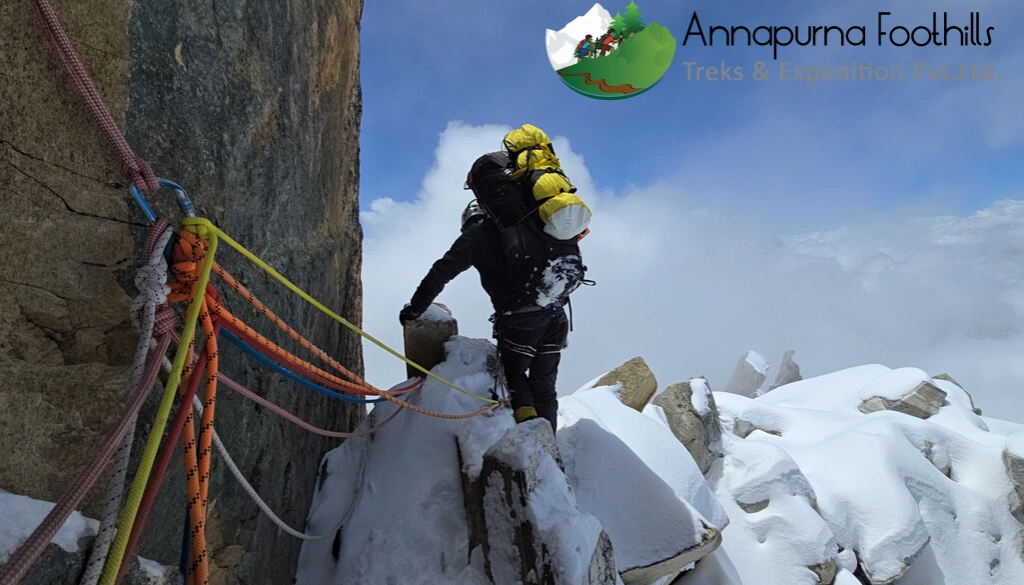
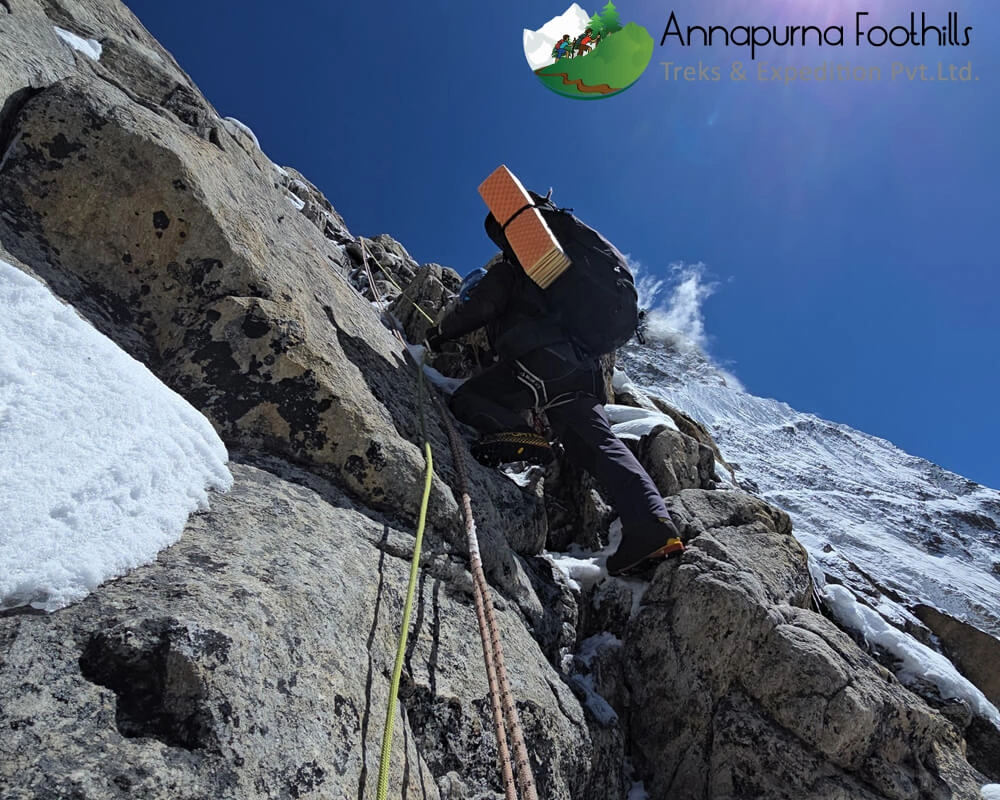
The Yellow Tower is a nearly vertical, 10-15 meter (approximately 33-50 feet) rock wall encountered on the climb from Camp 1 to Camp 2.

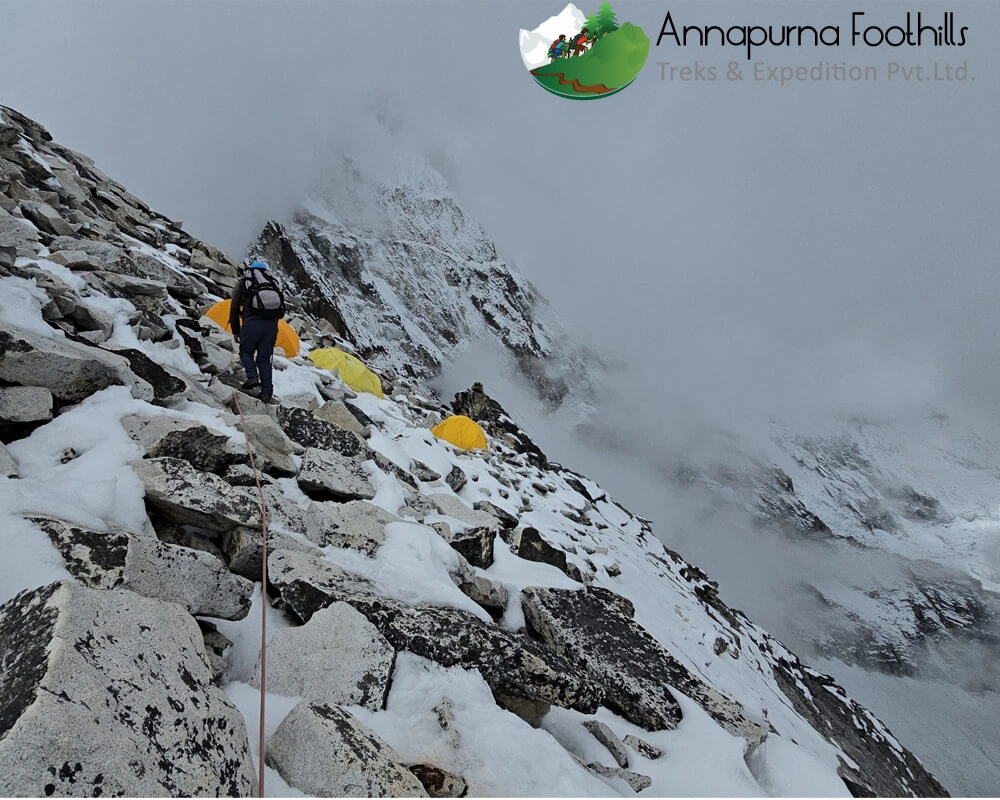
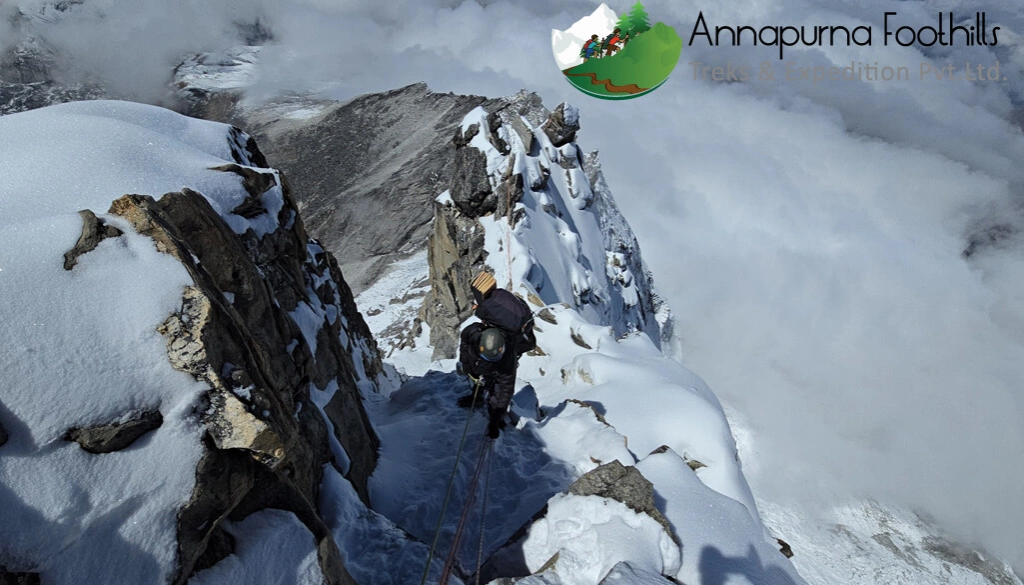
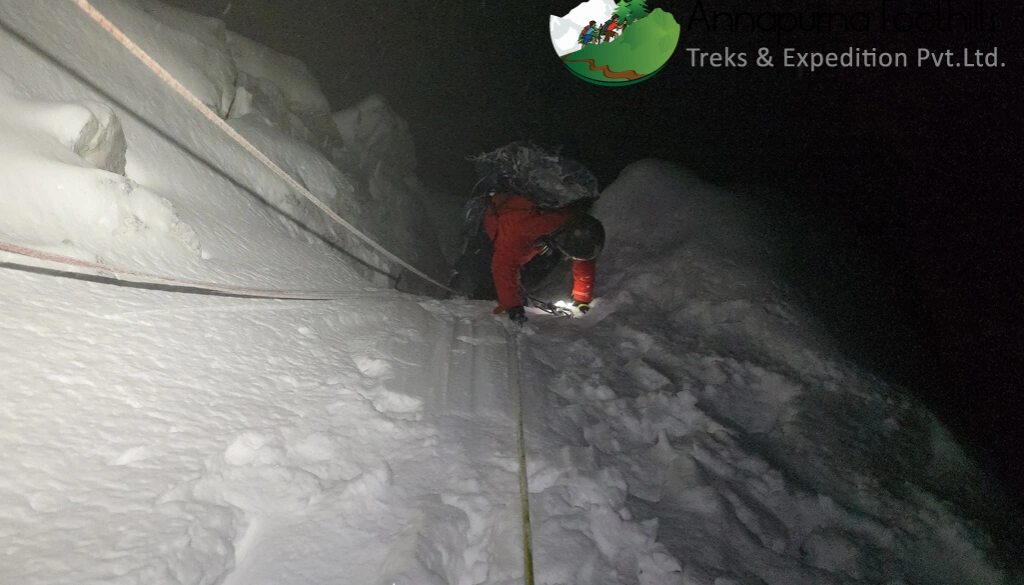
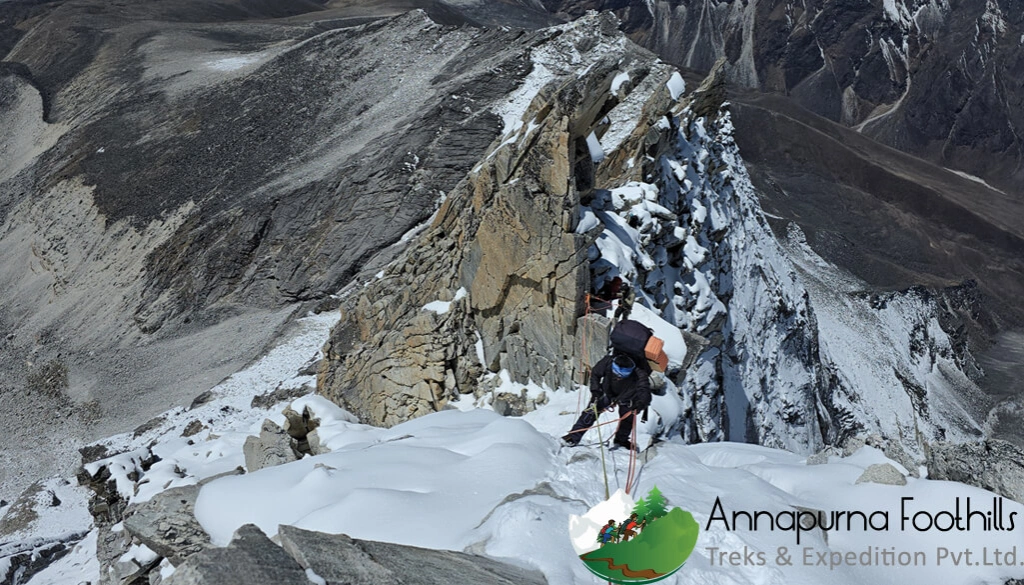
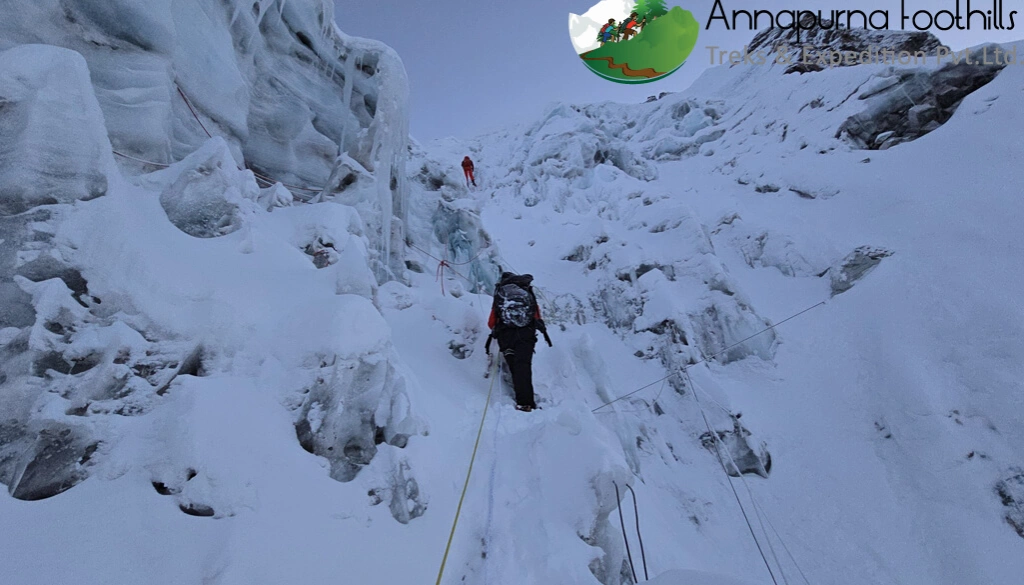
The hike to Camp 1 is not too hard. The Yellow Tower is a nearly vertical, 10-15 meter (approximately 33-50 feet) rock wall encountered on the climb from Camp 1 to Camp 2. the trail gets harder. The path is narrow and rocky. From Camp 2 to Camp 3, it becomes even harder. There is some danger of falling ice and snow. But many people say every adventure has some risk. To climb Ama Dablam, you should know how to climb rocks and ice. You should also be used to high places. If you have climbed mountains before, the Ama Dablam Expedition can be a great adventure.

Ama Dablam Expedition Route: Gokyo Lakes & Island Peak

Our Ama Dablam expedition begins with a scenic flight from Kathmandu to Lukla. We then trek along the classic Everest Base Camp route, arriving in Namche Bazaar.

From Namche, we diverge from the Everest Base Camp trail and head towards the Gokyo Valley. Our journey continues through Dole and Machhermo, leading us to the Gokyo Valley. After exploring the valley and Gokyo Ri, we trek towards Chola Pass and on to Island Peak. Following our ascent of Island Peak, we proceed to Ama Dablam for its summit.

After a successful Ama Dablam expedition, we retrace our steps to Namche and then to Lukla, concluding our trekking and climbing adventure. Your trip officially ends with your international departure from Kathmandu.

Staying at Ama Dablam Base Camp

At Ama Dablam Base Camp, you will stay in a clean and comfortable teahouse, well-maintained and known for its excellent service. It is considered one of the best accommodation options in the area. We usually provide private rooms to ensure a quiet and restful environment for our guests. Many climbers choose this teahouse for its quality facilities and warm, welcoming atmosphere.
Highlights of Island Peak and Ama Dablam Expeditions

  • This expedition combines the ascent of Island Peak (6,189m), an ideal preparatory climb, with the formidable challenge of Ama Dablam (6,812m)
  • Before starting the Ama Dablam expedition, you'll complete several preparatory climbs. These include Gokyo Ri (5,320m), reached by crossing the Chola Pass (5,420m), and then ascending Island Peak (6,189m).
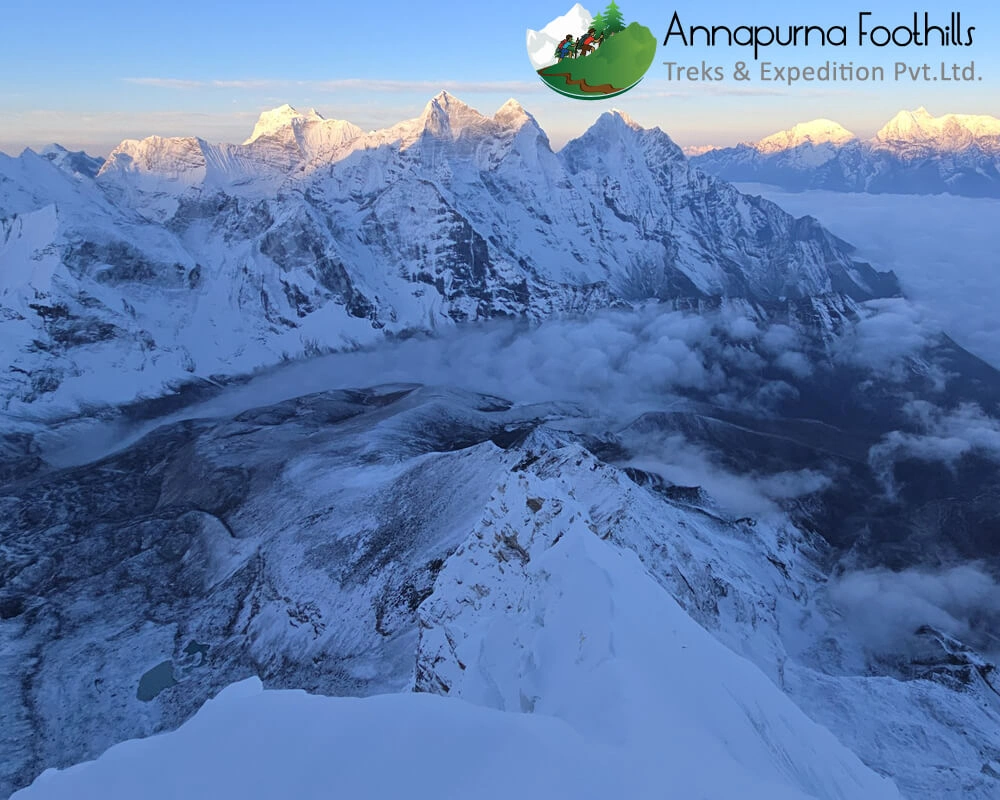
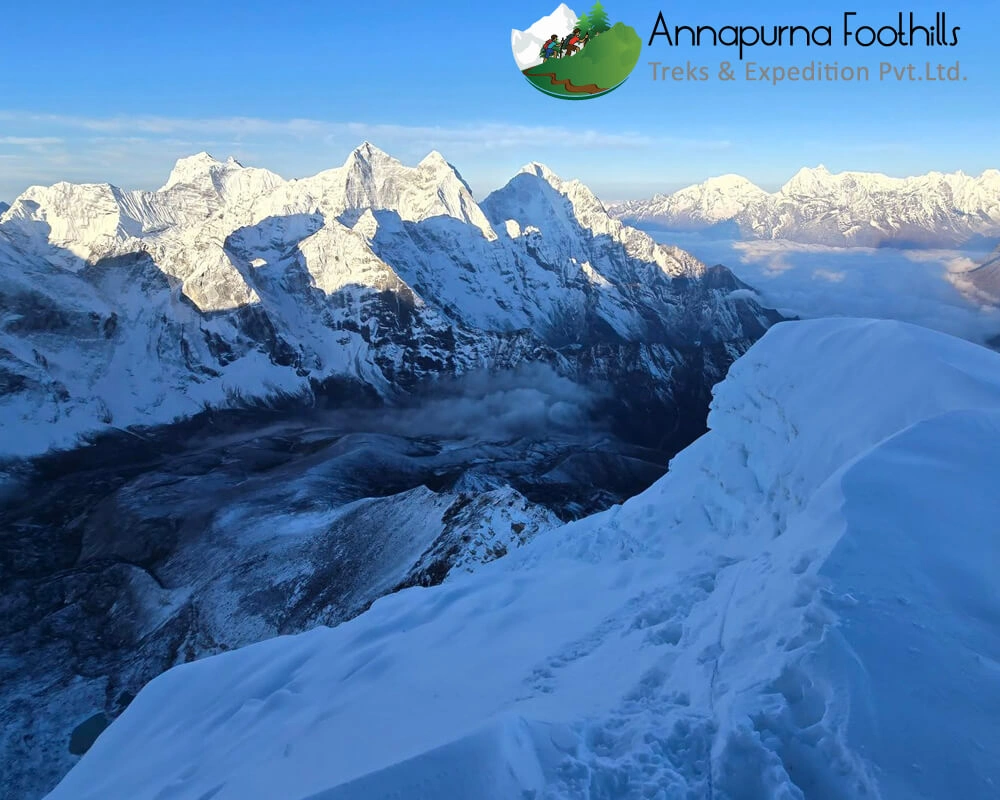
  • Witness the majestic peaks of the Khumbu region, including Mount Everest, Mount Cho Oyu, Mount Makalu, Mount Lhotse, Lhotse Middle Peak, Lhotse Shar, Mount Nuptse, and Mount Baruntse.
  • Venture into Sagarmatha National Park. See high mountain valleys, glacial lakes, and diverse flora and fauna. Find Buddhist shrines, monasteries, alleys, chortens, prayer flags, wheels, and mani walls.

Itinerary

Expand All Collapse All
Day 1: Arrival in Kathmandu, 1,300 m/4,265 ft
  • Hotel
  • Breakfast, & Welcome Dinner
  • Hotel
  • Breakfast, Lunch & Dinner
  • Tea House/ Lodge
  • Breakfast, Lunch & Dinner
  • Tea House/ Lodge
  • Breakfast, Lunch & Dinner
  • Tea House/ Lodge
  • Breakfast, Lunch & Dinner
  • Tea House/ Lodge
  • Breakfast, Lunch & Dinner
  • Tea House/ Lodge
  • Breakfast, Lunch & Dinner
  • Tea House/ Lodge
  • Breakfast, Lunch & Dinner
  • Tea House/ Lodge
  • Breakfast, Lunch & Dinner
  • Tea House/ Lodge
  • Breakfast, Lunch & Dinner
  • Tea House/ Lodge
  • Breakfast, Lunch & Dinner
  • Tea House/ Lodge
  • Breakfast, Lunch & Dinner
  • Tea House/ Lodge
  • Breakfast, Lunch & Dinner
  • Tea House/ Lodge
  • Breakfast, Lunch & Dinner
  • Tea House/ Lodge
  • Breakfast, Lunch & Dinner
  • Tea House/ Lodge/ Tent
  • Breakfast, Lunch & Dinner
  • Tea House/ Lodge
  • Breakfast, Lunch & Dinner
  • Tea House/ Lodge
  • Breakfast, Lunch & Dinner
  • Hotel
  • Breakfast, Lunch & Dinner
  • Hotel
  • Breakfast, Lunch & Dinner
  • Hotel
  • Breakfast

What's Included

Accommodations

  • Kathmandu (5 Nights): Standard tourist hotel on a twin-sharing basis with breakfast
  • Teahouse (15 Nights): Twin-share rooms with comfortable foam mattresses and pillows
  • Camping (9 Nights): Tents at Base camp, Camp I, Camp II, Camp III
  • Camping Gear Provided: Tents, Mattresses, and kitchen equipment

Meals & Drinks

  • Teahouse Trek: 3 daily meals included (Breakfast, Lunch, Dinner)
  • Camping: 3 daily meals + boiled water, tea, and coffee included
  • Welcome Dinner: Authentic Nepali dinner with a live cultural show
  • Trail Energy: Free chocolate bars (Snickers, Mars, Bounty) for the climb
  • Fresh Fruits: Seasonal fruits served regularly throughout the trek

Transportations

  • Transfer from Airport – Hotel – Airport: Car, Van, Hi-ace or Coaster in a private vehicle.
  • Round-trip airfare between Kathmandu/Manthali and Lukla (Airport Tax Included)
  • Excess baggage fees 25-28 kg Per Person between Kathmandu/Manthali and Lukla
  • Kathmandu – Manthali – Kathmandu transportation by shared tourist vehicle

Guides and Climbers Ratio:

  • 1 Climber:1 Sherpa Climbing Guide

Guide and Staffs

  • Sherpa Climbing Guide
  • Cook and Necessary Camping staff and porters
  • Porters: 1 Climber: 1 Porter
  • Government Liaison Officer 
  • Wages, accommodation, meals, and insurance

Base Camp Services

  • Single sleeping Tent Or Room for each member
  • Foam mattress and pillow provided
  • Dining tent
  • Solar panels available for lighting and battery charging

High Altitude Tents, Equipment’s and Foods

  • High-altitude cooking pots
  • Gas burners and EPI gas for meal preparation
  • High-altitude sleeping tents provided at all camps, two members will share one tent
  • High-Altitude Nutrition – Special high-energy meals designed for climbing and high-altitude conditions

Benefits and Takeaways

  • Annapurna Foothills Treks duffel/kit bag 85 liters, trekking map
  • Annapurna Foothills Souvenir
  • Island peak and Ama Dablam Climbing Expedition Summit Certificates

High Altitude Supports

  • First aid medicine kit
  • Supplementary Oxygen Cylinder with mask regulator
  • Thuraya Satellite phone for logistical, safety, and personal emergency use only
  • Walkie-talkies for effective communication between guides, climbers, and Base Camp
  • Insurance covers Rescue Evacuation and medications for all Nepalese staff
  • Pulse Oximeter (Oxygen Meter) to monitor your oxygen level, pulse rate, and heart health during your trip
  • 24/7 helicopter rescue assistance for medical emergencies (covered by your travel insurance)

Group Climbing Gears

  • Climbing rope
  • Ice screw
  • Snow bar
  • Ice Hammer

Permits & Taxes

  • Island Peak and Ama Dablam Expedition Climbing Permit
  • Local Permit and Sagarmatha National Park Fee
  • TIMS (Trekkers’ Information Management System)
  • All administrative expenses and government taxes

What’s Excluded


  • Your Personal Travel Insurance
  • Nepal Entry Visa (Valid passport forat least six months)
  • International airfare
  • Lunch & Dinner in cities - allow $ 10 to $ 14 per meal in Tourist restaurants
  • Beverages (all drinks, mineral water, boiled water, and beer)
  • Tips for the guide, porters, and driver (customary)
  • Any personal expenses not mentioned in the above services
  • Additional night accommodation in Kathmandu because of early return from the trek (for any reason) than the planned itinerary


Tipping Guidelines

Tipping is a customary way to show appreciation for the hard work and dedication of our expedition support team

  • Base Camp Support Cook and Staff– USD 100–130 per person (for helpers staying at Base Camp)
  • A Porter: USD 200–250 (One personal porter per climber from Lukla to Base Camp and back, carrying up to 25–28 kg of luggage.)
  • Climbing Sherpa (Summit Bonus) – USD 700–1000 (for supporting you to the summit and back safely)


Departure Dates

FromToStatusPrice  
Start Date12 Oct, 2026End Date10 Nov, 2026AvailableUS$ 6800

Private Climb to Ama Dablam Expedition is possible. Contact us to design your own private trips with you loved ones.

Solo Expedition: Single trekkers are always welcome to join the climb. On your arrival at Kathmandu, you’ll have a single room in Kathmandu Hotel as per your requirement and have to share a room at the local teahouses during the trekking.

Departure Note:

Guaranteed- We already have trekkers booked for those dates and you can join the group.

Available - The date is available to book and once you confirm your trip it will be guaranteed.

Limited - The departure date is filling fast and only limited seats are available to join.

ClosedThe Trip cannot be booked on that specific date. Contact us for customized dates.
 

The departure dates are your arrival dates in Nepal.


We have set dates for departure to the Ama Dablam Expedition. So, pick your preferable date and let the adventure begin.

If the date you prefer is not listed on our departure dates then you can contact us directly to book the trip on your own desired date.

We have listed the price up to 06 trekkers at maximum. If you are more than 06 climbers, then please feel free to contact us for amazing discounted group price and further booking process.
 

Useful Info

Island Peak and Ama Dablam Expedition Packing List:

“There's no such thing as bad weather, only unsuitable clothing.” Alfred Wainwright

Are you planning your dream trip to the Himalaya of Nepal? Make sure you have packed well for your hiking, trekking and climbing experiences in Nepal. The time period of your visit also determines your packing list. The best trekking seasons for beginning your Ama Dablam Expedition are spring and autumn. During these seasons, maximum flow of trekkers can be witnessed. Weather during spring (March – May) and autumn (September – November) are likely to be mild with clear blue sky and outstanding mountain views. But nights can get freezing cold at higher elevation. So, packing appropriate clothing, gear, and equipments for your Ama Dablam Expedition is a must for lifetime memorable trekking and climbing experience in Everest region of Nepal.

A strategically way of packing will be keeping in mind that your stuffs will be packed in two bags. One will be the daypack that you carry every day on your trek. Pack your daypack as light as possible by carrying only the essentials so that you can relish your moments in wilderness freely. Pack anything you may need each day during your hike in your daypack. Other bag will be your duffle bag which will be carried by your Porter from the very beginning of your trek till the end.


Upper Body:

  • Warm beanie hat
  • Tubular Headwear (buff)
  • Sun Hat or Cap (cap and buff all fit under your hood)
  • Polarized Sunglasses with UV protection
  • Headlamp (Black Diamond / Petzl) with spare batteries
  • Sunscreen with factor 50+

Upper Body (Core body):

  • 3 Light and trekking weight thermal tops
  • 3 T-shirts or cool-max trekking shirts
  • 1 Fleece Jacket or pull over (Merino, soft shell)
  • 1 Waterproof shell jacket with hood (lightweight, breathable)
  • 1 Down Jacket


    Lower Body:

    • 2 Thermal base layers (merino or polartec power dry)
    • 2 Pairs trekking pants, preferably that zip on/off at the knees so they double as shorts.
    • 1 Heavy weight hiking trousers (wind proof soft shell for warmth at higher altitude)
    • 1 Waterproof/ Rain pants
    • 2 Light Hiking shorts
    • 2 Fleece Pants
    • 4 Under wears (merino)

    Hands:

    • 1 Lightweight gloves or liner gloves
    • 1 Pair shell gloves (Gore-Tex)
    • 1 Waterproof outer glove

    Feet:

    • 3 Warm Trekking socks (smart wool)
    • 3 Pairs of liner socks
    • 2 Pairs of thick/ warm socks
    • 2 Thick wool socks to wear at night in lodges
    • Trekking Boots (waterproof, ankle support with rigid sole)
    • Lightweight Rubber Shoes / Trainers / Trail Runner to wear at the Tea Houses

    Accessories:

    • 1 Daypack (approximately 2500 to 3000 cubic inches) 40 - 50 Liters
    • 2 Water bottle or camel bag, 1-liter (one with an insulated cover is recommended)
    • Large duffle bag (and a lock as the porters will carry this)
    • A pair of adjustable Trekking Pole
    • Camera with extra battery
    • Sleeping bag (- 15 C depending upon trips)
    • Sleeping Bag liner
    • Ear Plugs
    • Portable Solar Charger
    • Smart Trekking Watch

    Personal First Aid Kit:

    Please do note that our trekking guides will be too carrying the first aid kit with them especially for the guests and the entire team as a whole. Still, we suggest the following items to be carried with you while trekking in the Himalaya of Nepal.

    • Personal Medication
    • Diarrhea Stopper (e.g. Imodium)
    • Paracetamol Tablets
    • Small Swiss Army knife (which has knife, scissors and tweezers)
    • Diamox for altitude (consult your doctor about this)
    • Water Purification tablets or drops
    • Blister kit / Zinc Tape
    • Hand Sanitizer
    • Dressing Gauze
    • Antibiotic Cream