• Duration:17 Nights 18 Days
  • Difficulty: Challenging
  • Max. Altitude: 6476m
  • Group Size: 6
  • Activity: Trekking and Climbing
  • Pick Up: TIA

About Mera Peak Climbing with Helicopter Return Trek

If you are looking for a challenging and rewarding adventure, Mera Peak Climbing with Helicopter Return is the perfect trip for you.

Mera Peak Climbing with Helicopter Return is a great way to experience the magnificence of the Himalayas and summit a challenging peak. The climb is not technically difficult, but it requires good fitness and some basic mountaineering skills. However, it is not a technical climb and can be completed by anyone reasonably fit.

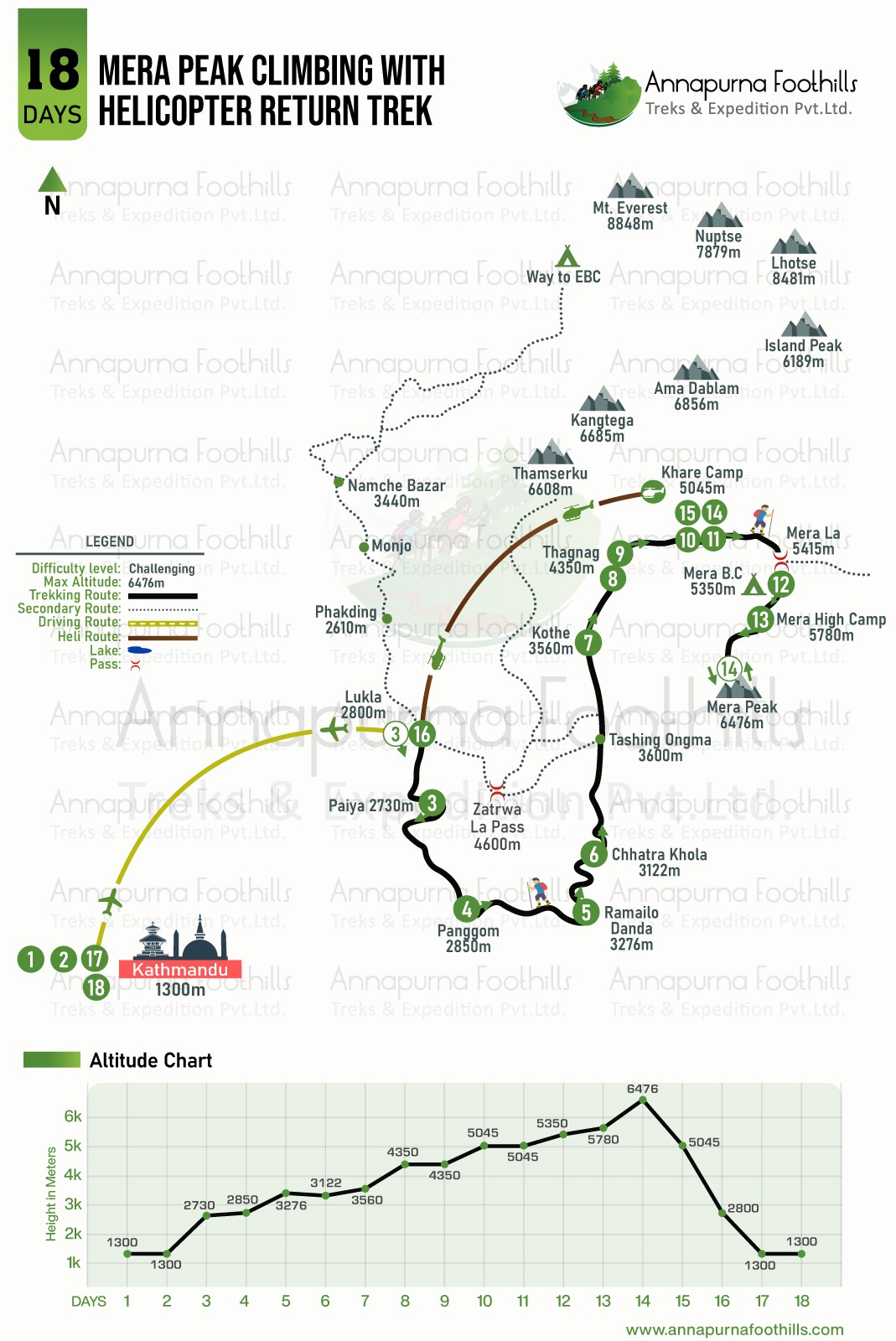
Our amazing Mera Peak Climbing with Helicopter Return trip begins in Lukla, Nepal, and ascends through the Hinku valley to Khare (5045m). Afterward, we traverse several Sherpa settlements, namely Paiya (2730m), Ramailo Danda (3276m), Chhatra Khola (3122m), Kothe (3600m), Thangnak (4356m), and finally Khare (the last settlement before moving towards our major objective).

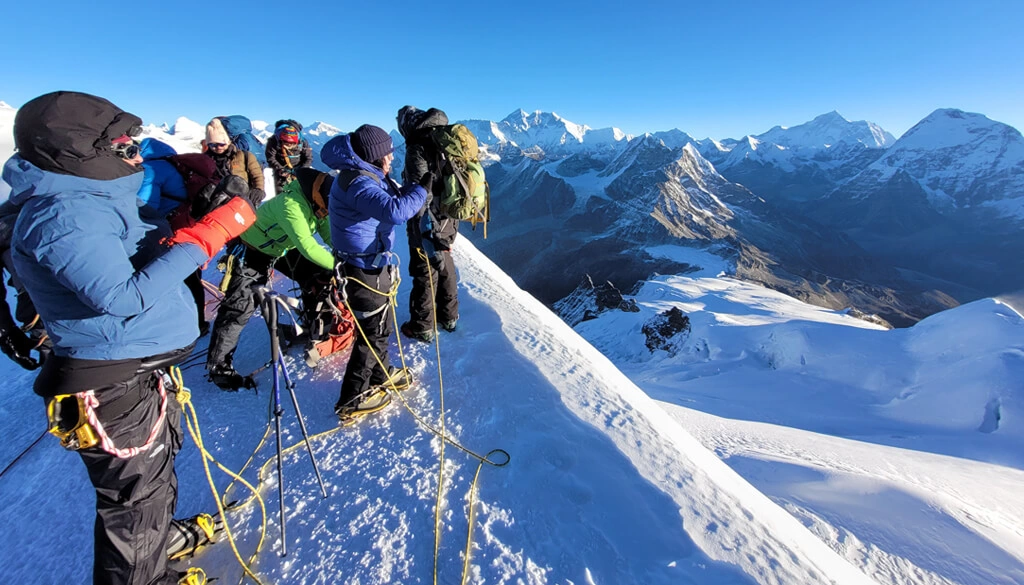
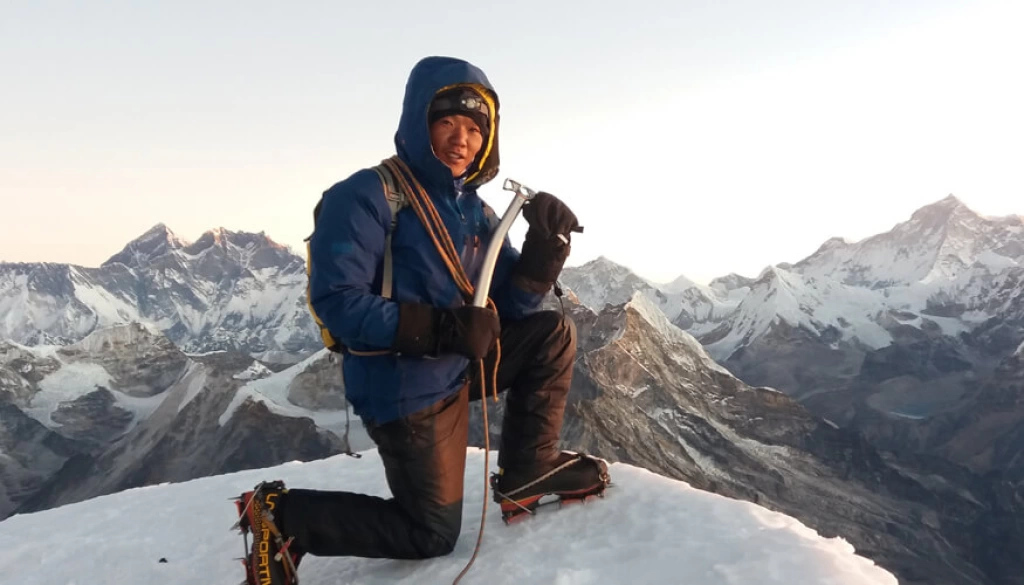
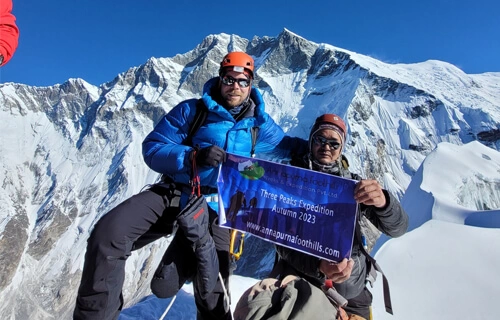
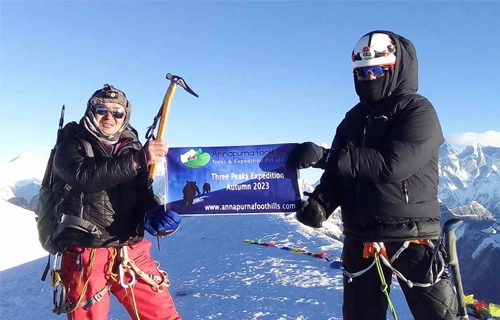
Leaving Khare, we ascend to the summit through a series of fixed ropes. The summit of Mera Peak is at an altitude of 6,476 meters. It offers panoramic views of some of the world's most famous mountains: Mt. Everest 8,848 m (29,031 ft.), Mt. Kanchenjunga 8,586 m (28,169 ft.), Mt. Lhotse 8,516 m (27,940 ft.), Mt. Makalu 8,481 m ( 27,825 ft.) and Mt. Cho Oyu 8,188 m (26,864 ft.).


    Highlights of Mera Peak Climbing with Helicopter Return Trek

    • Astonishing aerial view of Khumbu giants (Mahalangur Himalayan Range) from Helicopter while returning to Lukla
    • Eye witness the five highest 8000m+ mountains on Earth, including Mt. Everest (8848.86m) from Mera Peak summit
    • One of the most tempting Trekking Peaks in Nepal
    • Adequate acclimatization: The climb of Mera comes after a week-long trekking designed to give you the best chance of an enjoyable and fulfilling journey.
    • Straightforward climb, ideal for novice climbers wishing to climb their first mountain in Nepal
    • Traverse through the wild and remote Hinku and Hongu Valleys
    • Well set up camps at Mera Peak Base camp and High camp
    • Fully Guided Trip
    • Trek and climb with our certified and experienced Sherpa Climbing Guides

    Itinerary

    Expand All Collapse All
    Day 1: Arrival in Kathmandu 1,300m/4,265ft

    Your arrival in Kathmandu is an exciting and memorable experience. On a clear day, you will get a panoramic view of the snow-capped towering peaks. Collect your luggage and exit the terminal after completing the visa formalities at the airport.

    One of our representatives will welcome you with your name on our company's signboard, Annapurna Foothills Treks. They will take you to your hotel in our private tourist vehicle. Once you arrive at the hotel, you will be welcomed by the staff and can relax in your room.

    • Welcome Dinner
    • Hotel

    The Managing Director of our company will meet you at the hotel to provide more information about the expedition. You will need to clear your dues before we proceed with the trip. We will finalize the paperwork and permits for your trip and make a final check of your climbing equipment. If you need any additional trekking gear, you will have a chance to buy it today. You can also choose to take a sightseeing tour of Kathmandu Valley.

    • Breakfast,
    • Hotel

    We start with a 1 a.m. pick-up from our Kathmandu hotel and drive about five hours to Ramechhap. From there, we take a 20-minute morning flight to Lukla. (In the off-season, flights sometimes go straight from Kathmandu.)

    Landing at Lukla on its narrow, sloped runway in the mountains is an amazing way to enter the Khumbu region. Here, we meet our trekking team and begin the first part of the trek, going downhill to Surke (2,300 m) along the Dudh Kosi River. Surke Village is also the birthplace of Late Pasang Lhamu Sherpa (1961–1993), the first Nepalese woman to reach the top of Mount Everest.

    From Surke, we follow the original Jiri-to-Everest trail, walking through terraced farmland for a few kilometres. The path then slowly climbs to Pakhepani (2,560 m). Along the way, in spring, you can see rhododendron forests in full bloom. Sometimes, the trail from Surke to Paiya can get muddy during the monsoon.

    The day ends at Paiya (2,730 m / 8,956 ft), where you get amazing views of Kongde Ri, Khatang, Tang, and other peaks over 7,000 m.

    Helicopter Option

    Flying in a helicopter is a unique experience that adds a touch of luxury to your journey. You can enjoy the pristine beauty of the Khumbu Himalaya in style. The helicopter flight will take you directly from Kathmandu to Lukla, bypassing the long drive and flight. This is an excellent option if you want to save time and avoid the crowds. The helicopter option costs an additional USD 400 per person (on a sharing basis).

    • Breakfast, Lunch & Dinner
    • Tea House/ Guest House

    Soon after leaving the lodge, we take a winding trail up through rhododendron and oak forest. The trail crosses a ridge above 3,000 m and drops into the Khari Khola valley at 2,400 m. The path winds through thick forest and past tall waterfalls. You can see monkeys, birds, and sometimes deer. There are plenty of spots to stop and take photos. The trail then climbs to Pangkongma (2,850 m) with a small monastery. Along the way, we pass a few quiet farming villages.

    • Breakfast, Lunch & Dinner
    • Tea House/ Guest House

    A great day of trekking which begins with a climb up to the Pangkongma La (3174m) on the main watershed separating the valleys of the Dudh Kosi and Hinku Khola. We have our first sight of Mera Peak before making a steep descent to the village of Sibuje (2,770 m). From here the trail is undulating as we make our way through the forested river valley to Ningsow (2850m).
    We have a steep climb up to a tea house Ramailo Dalda at 3,276 metres, which affords tremendous views Mera Peak 6,476m and Naulekh 6,240m.

    • Breakfast, Lunch & Dinner
    • Tea House/ Guest House

    We climb up to the highest point of the day at 3,350 m. Then we walk down on a zig-zag trail through Makalu Barun National Park to the Tama Khola River, with a lunch stop on the way. In the afternoon, we walk through bamboo and rhododendron forest to Bamboo Camp. From here, the trail to Chhatra Khola is called the Pasang Lhamu Trail. At the end of the day, we cross the river on a big tree trunk bridge and reach our lodge at Chhatra Khola. 

    • Breakfast, Lunch & Dinner
    • Tea House/ Guest House

    We continue trekking through the forest until we reach Tok-Tok village, where we join a larger trail and start seeing signs of civilization again. After lunch, we pass through Tashing dingma before descending to the Inkhu Khola at Mosom Kharka. From here, we follow the river to the village of Khote. We are now inside Makalu Barun National Park and already beginning to enjoy impressive views of Mera Peak.

    • Breakfast, Lunch & Dinner
    • Tea House/ Guest House

    We follow the west bank of the Hinku Thangnak heading north. As we go, the forest slowly fades away and the valley opens up wide. There are no villages in the upper Hinku Valley, only small grazing areas where locals keep goats, sheep, and yaks. On the left, you’ll see the twin peaks of Kusum Kanguru, while on the right, the valley is lined by the steep rock face of Mera’s nearby peak. Straight ahead, framed by the valley, is Peak 43.

    We stop for lunch at Gondishung, a summer herders’ camp with a few simple stone shelters and old enclosures. There is also a long mani wall with beautifully carved prayer stones. Just beyond, we pass a unique 200-year-old gompa built under a huge boulder, along with several small mani walls. It’s worth stopping here to visit the gompa and offer some juniper at the shrine, a local tradition believed to bring good luck for climbing Mera Peak.

    From the gompa, it’s about an hour’s walk across rocky moraines to Thangnak, a yak herders’ settlement. In the past, it looked much like Gondishung, but now there are several teahouses here. We spend at least two nights in Thangnak (4,350 m) to rest and adjust to the altitude before heading up to Khare.

    • Breakfast, Lunch & Dinner
    • Tea House/ Guest House

    A day for acclimatisation. One option for an acclimatisation walk is to trek up the nearby ridge coming down from Kusum Kanguru, where we can reach an altitude of just over 5000 metres on the hill known as Shartemba Go. Here, we have spectacular views of Kusum Kanguru and of our route up onto the Mera La.

    Acclimatization is Key

    Acclimatization is essential for any successful trek, climb, or expedition. It adapts to low oxygen levels at high altitudes. There are a few things that you can do to help your body acclimatize which are:

    Hike High, Sleep Low. This means you should gain as much elevation as possible during the day but then sleep at a lower altitude. It will help your body to adjust to the lower oxygen levels slowly.

    Take it Slow. Don't try to do too much too soon. Give your body time to adjust to the altitude.

    Drink Plenty of Fluids. It is essential to stay hydrated at high altitudes. Drink plenty of water, tea, or soup.

    Listen to your Body. If you start to feel unwell, such as having headaches or nausea, descend to a lower altitude.

    • Breakfast, Lunch & Dinner
    • Tea House/ Guest House

    This morning’s walk along the Dig Tsho Glacier is easy and relaxed. The valley opens up nicely, giving great views to the north of the Hinku Nup Glacier and the peaks beyond.

    The final section up to Khare is steep. If you have the time and energy, you can take a short acclimatization walk up the grassy ridge behind the village for excellent views of the glacier and the ridge we’ll climb tomorrow, as well as Mera Peak to the west.

    • Breakfast, Lunch & Dinner
    • Tea House/ Guest House

    Today is a rest day at Khare, where we will focus on acclimatization and preparation for the summit attempt. We will spend the day exploring the village and practising climbing techniques with our Climbing Guide. We will also make short hikes around the area to help our bodies adapt to the high altitude.

    Listening to your body and resting if you feel tired or unwell is essential. If you experience any symptoms of altitude sickness, such as headache, nausea, or shortness of breath, make sure to tell your guide immediately and discuss what to do next.

    • Breakfast, Lunch & Dinner
    • Tea House/ Guest House

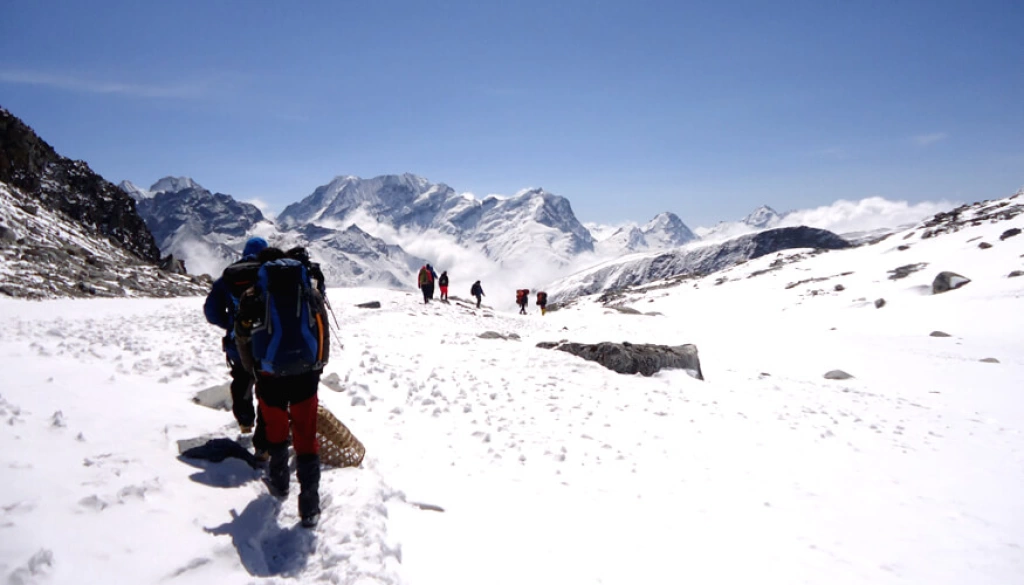
    Leaving base camp, we make our way up to the ridge above Khare before crossing a rugged, boulder-strewn landscape toward the rising slopes of the Mera Glacier. The walk takes around two hours, with the terrain gradually becoming more alpine and wild. As we move higher, patches of snow and ice appear, and we gear up with crampons to continue safely.

    From here, we push upward at a steady pace, surrounded by vast mountain scenery, until we reach a broad, open area at around 5,300 meters. This becomes our high mountain camp, set against a dramatic backdrop of ice and peaks, marking another step closer to the summit.

    • Breakfast, Lunch & Dinner
    • Tent

    We make the steep ascent to Mera La, where we enjoy panoramic views of the surrounding mountains, including Mount Everest, Makalu, Kanchenjunga, Cho Oyu, and the south face of Lhotse, Nuptse, Chamlang, and Baruntse. From Mera La, we continue up the rock-strewn north flank to a rocky outcropping, where we set up high camp.

    • Breakfast, Lunch & Dinner
    • Tent

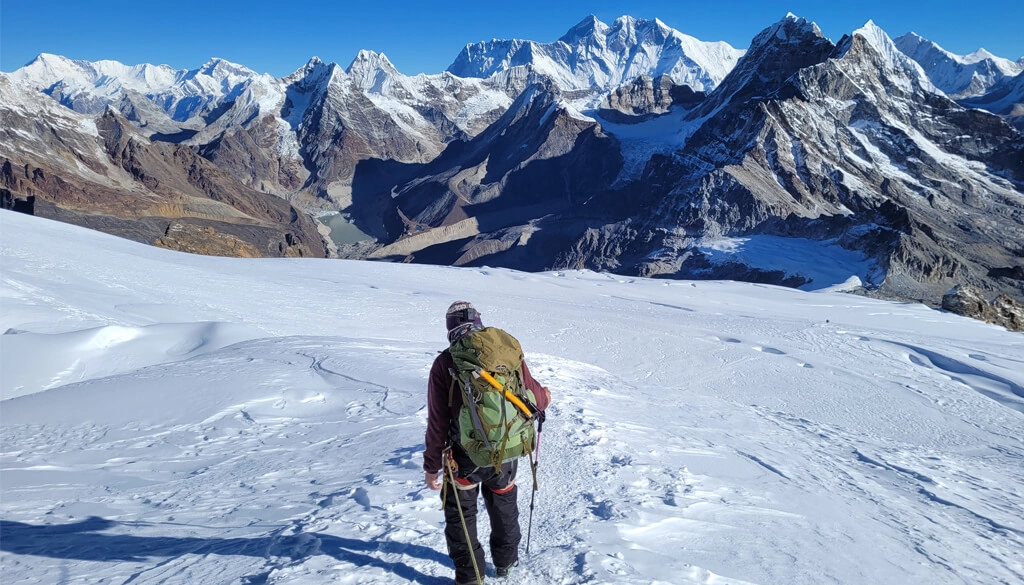
    The summit day is typically the most challenging and exciting part of the climb. You will push for the summit in the early morning, often before dawn. The final section of the climb involves a push toward the summit. The terrain can vary, including snow slopes and possibly exposed ridges. Ropes, crampons, and ice axes may be necessary.

    Reaching the summit of Mera Peak is, undoubtedly, a remarkable achievement. You will take your time relishing and enjoying the breath-taking panoramic, which includes the world's five tallest mountains which are Mt. Everest 8,848 m / 29,031 ft.), Mt. Kanchenjunga (8,586 m / 28,169 ft.), Mt. Lhotse (8,516 m / 27,940 ft.), Mt. Makalu (8,481 m / 27,825 ft.) and Mt. Cho Oyu (8,188 m / 26,864 ft.). After spending some time on the summit, we will begin your descent back to Khare. 

    • Breakfast, Lunch & Dinner
    • Tea House/ Guest House

    We have included a spare contingency day in the itinerary if our summit attempt is delayed due to bad weather or the need to rest for another day. It gives us some flexibility and allows us to wait for a better weather window or to give someone in the group time to recover from altitude sickness.

    If the spare contingency day is unnecessary, it will be added as an extra free day in Kathmandu. This will allow you to explore the city, visit some temples, or shop.

    We hope you will not need to use the spare contingency day. Still, we appreciate your understanding that it is there for your safety and well-being.

    • Breakfast, Lunch & Dinner
    • Tent/Tea House/ Guest House

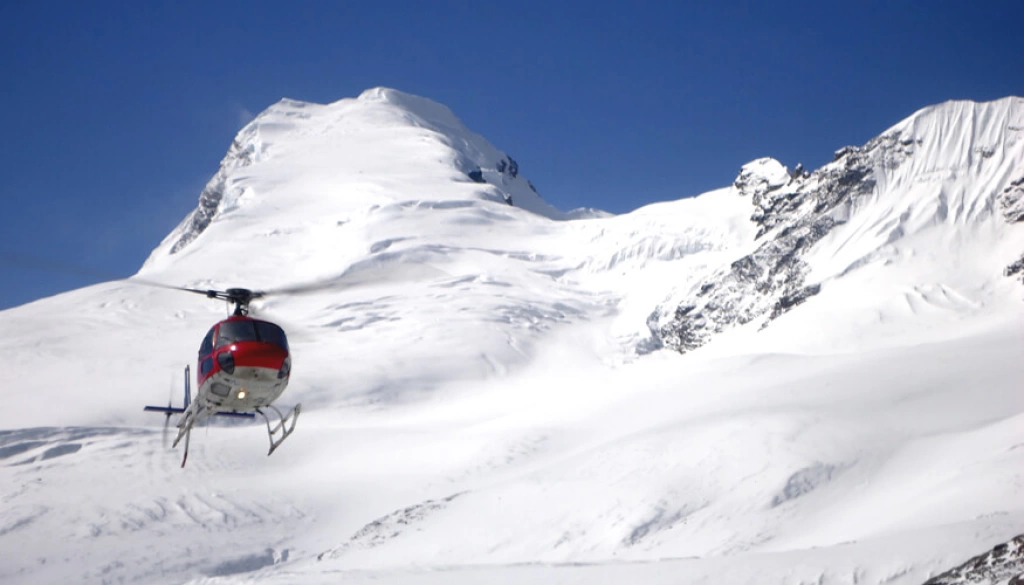
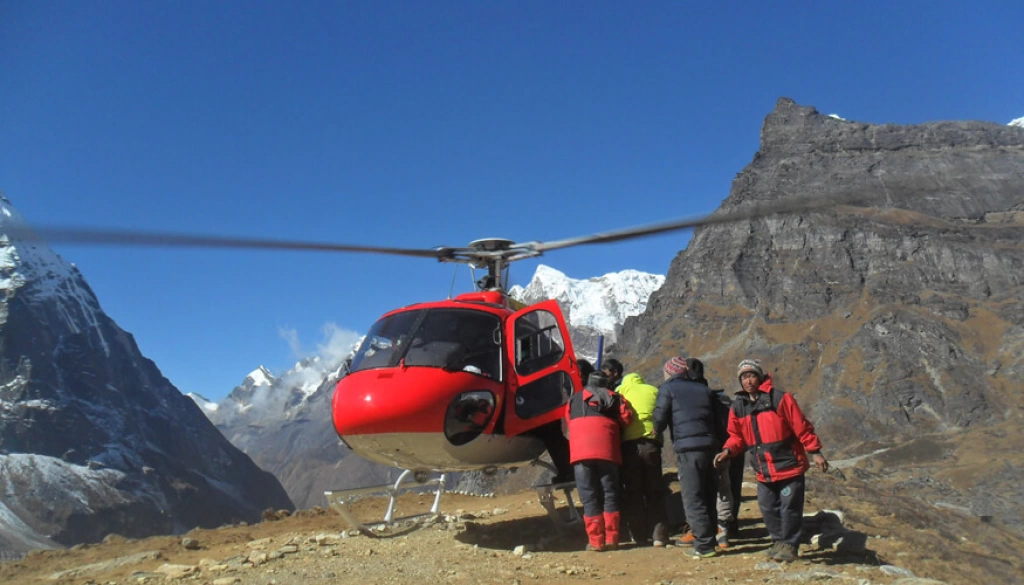
    A celebratory breakfast will be enjoyed leisurely at Khare this morning. Then, departing from our wonderful crew, we will get on a one-hour nerve-delighting helicopter flight across the huge Himalayan colossi once again.

    At Lukla, our heli will halt for around 15 minutes, giving us another chance to watch the brimming mountains.

    • Breakfast, Lunch & Dinner
    • Tea House / Guest House

    Morning Flight to Kathmandu

    We take a scenic morning flight back to Kathmandu, giving us one last chance to say goodbye to the mountains. During the off-season in Nepal (December - February, June – August), travellers can enjoy a direct flight from Lukla to Kathmandu. The flight takes approximately 40 minutes. From the domestic airport, we will be transferred to our hotel in Kathmandu on a private tourist vehicle.

    Flying from Lukla to Manthali

    The flight from Lukla to Manthali is short, taking approximately 17-20 minutes. The views from the plane are excellent, as you get to see the snow-capped peaks of the Himalayas up close.

    Afterwards, we drive back to Kathmandu from Manthali, which usually takes 5-6 hours (the time may vary depending on traffic conditions). During the peak seasons, spring (April–May) and autumn (October–November), we will fly from Lukla to Manthali instead of taking the direct flight to Kathmandu because of Air Traffic Congestion (ATC).

    Helicopter Option

    Helicopter Flight from Lukla to Kathmandu

    Flying in a helicopter is a unique and luxurious way to travel and a great way to see the pristine beauty of the Khumbu Himalayas. The flight from Lukla to Kathmandu takes approximately 40 minutes.

    The helicopter flight is an additional cost of USD 400 per person. This price is based on a sharing basis of 5 people. The cost will be higher if you would like to book a private helicopter flight.


    • Breakfast and Lunch
    • Hotel

    On your departure day, we will transfer you to the airport from your hotel on a private Tourist vehicle. The transfer to the airport takes approximately 30 minutes, depending on the traffic conditions. Please be ready to depart at least 2 hours before your flight. Until next time, we bid farewell to you, hoping to welcome you to Nepal again for your next once-in-a-lifetime adventure with us. 

    • Breakfast

    What's Included

    • Transfer from Airport – Hotel – Airport: Car, Van, Hi-ace, or Coaster in a private vehicle
    • Authentic Nepali welcome dinner with Live Nepalese Cultural Program
    • Accommodation in Kathmandu: Standard hotel 3 nights on Twin share Bed and Breakfast Basis
    • Accommodation during Trek: local lodges 12 nights (twin-share rooms, beds with comfortable foam mattresses and pillows
    • All standard meals (Breakfast, Lunch, and Dinner) during the trekking period
    • Accommodation during Camping: 2 nights in tents (one at Mera Peak Base Camp and another at Mera Peak High Camp).
    • Necessary camping staff, all Camping Equipment, sleeping tents/mattresses, kitchen tent, kitchen equipment
    • All standard meals (Breakfast, Lunch, and Dinner) with Boiled water, Tea, and Coffee during the climbing period
    • Climbing Guide and Climbers Ratio:
    • 1 Sherpa Climbing Guide: 1-2 Climbers
    • 2 Sherpa Climbing Guides : 3-5 Climbers
    • 3 Sherpa Climbing Guides: 6-8 Climbers
    • Porters: One porter for Two Trekkers basis in all of our Climbing Trips
    • Round-trip airfare between Kathmandu and Lukla (Airport Tax Included)
    • Kathmandu – Lukla – Kathmandu Excess baggage fees
    • Annapurna Foothills Duffle Bag for Trekking
    • Annapurna Foothills Souvenir
    • Energy Supplies Snickers, Mars, Bounty, etc
    • Supplementary Oxygen Cylinder with mask regulator or Gamow Bag (A life-saving device in case of AMS (Acute Mountain Sickness)
    • Thuraya Satellite phone for logistical, safety, and personal emergency use only
    • Pulse Oximeter (Oxygen Meter) to check your pulse oxygen saturation, and heart rate to monitor your health throughout your trip.
    • Assistance in arranging Helicopter rescue operations (24/7) in case of complicated health conditions or any other emergencies (should be covered by your Travel Insurance)
    • First aid medicine kit
    • Climbing rope, Ice screws, Snow bar
    • Mera Peak Climbing Permit
    • Mera Peak Climbing certificates issued from the respective body of the Nepal Government
    • Personal insurance for Nepalese staff
    • Makalu Barun National Park Fee, TIMS permits & all required permits or Official Documentation.
    • All government and local taxes.
    • Khare to Lukla Heli Shuttle.

    Personal Climbing Gear includes

    • Mountaineering/ Climbing Boots
    • Crampons
    • Helmet
    • Harness
    • Ice Axe
    • 2 x Screwgate Carabiners ( Lock and Unlock)
    • Descender ( Figure 8, Belay Device)
    • Ascender (Jumar)
    • Prussic Loops
    • 2 x Tape slings

    What’s Excluded

    • Your Personal Travel Insurance.
    • Nepal Entry Visa Fee.
    • Lunch & Dinner in cities - allow $ 10 to $ 14 per meal in Tourist restaurants.
    • Beverages (all drinks, mineral water, boiled water, and beer).
    • Tips for guide, porters, and driver (customary).
    • Any personal expenses not mentioned in the above services.
    • Additional night accommodation in Kathmandu because of early return from Trek (due to any reason) than the planned itinerary.

    Departure Dates

    FromToStatusPrice  
    Start Date01 May, 2026End Date18 May, 2026AvailableUS$ 2750

    Guaranteed - We already have trekkers booked for those dates, and you can join the group.

    Available - The date is available to book; once you confirm your trip, it will be guaranteed.

    Limited - The departure date is filling fast, and only limited seats are available to join.

    Closed - The Trip cannot be booked on that specific date. Contact us for customized dates.
     

    Useful Info

    Tipping your Guides and Porters for Mera Peak Climbing

    Tipping is a common practice in the hospitality industry, especially in the trekking and climbing field. It is a way to show appreciation for the services provided by guides and porters. It is important to acknowledge their hard work, dedication, and assistance throughout your Mera Peak expedition. Tipping is not mandatory, but it is customary and significantly appreciated. You can visit our Tips for Tipping page for detailed information.

    Food, Water, and Accommodation during Mera Peak Climbing

    Tea houses or lodges play a crucial role in providing accommodation and meals to trekkers and climbers in most of the trekking regions in Nepal.

    Food

    During Mera Peak climbing, meals consisting of a diet rich in carbohydrates are mostly served. This is because our bodies do not process fat and protein efficiently at higher altitudes. The meals are also designed to compensate for the increase in caloric need that high-altitude climbing involves. We try to make meals and breakfasts diverse and as standard as possible.

    Usually, you will have your breakfast and dinner at the same lodge where you will be staying. Lunch will be served at tea houses or small lodges along the trail. Typical meals are dal Bhat, rice, noodles, pasta, hash brown, potatoes, etc. with different styles (fried with veggies, eggs, veggies & eggs, plain, mixed). At tea houses, checking with your guide to get the most up-to-date information on food options and availability will be a wise thing to do.

    As you ascend to higher altitudes, the variety of food becomes more limited but fresh and healthy. At base camp and higher camps, our private climbing cook will prepare fresh and healthy breakfast, lunch, and dinners to all the team members with tea or coffee. With advance notice, we can arrange diets like vegetarian, vegan, gluten-free, etc. to members preferring so.

    Water

    It is equally important to prioritize your health and hydration during Mera Peak climbing. It is essential to confirm you have access to safe drinking water throughout your expedition. From Day 3 to Khare village (the last settlement) at an elevation of 5,045 meters, drinking water will be accessible and available in the teahouses where you will be staying, either from taps, boiled water, or bottled water. We strongly suggest our guests to be cautious of using untreated water from natural sources and tap as well as it may contain harmful microorganisms that can cause waterborne infections. We highly recommend drinking boiled water, or bottled water after using water purification tablets or steripen or portable water filters.

    While staying in tented camps during the climb, our supporting staff will carry and bring it all the way up to the tents. Then, we provide drinking water to our climbing members only after treating the water (boiled, sterilized, or boiled and sterilized) ensuring proper usage and effectiveness.

    Accommodation

    Most of the tea houses during the Mera Peak expedition will be owned, run, and managed by Sherpa families (family-run lodges). Most of the tea houses throughout your trek (up to Khare) will have a comfortable twin-sharing room for trekkers. The rooms are simple but clean. A room usually has two single beds with a foam mattress and pillow. The toilet could be shared or attached. A blanket is provided but many prefer to bring their own sleeping bag.

    In the peak climbing season, it might be difficult to find better accommodation due to the inflow of a large number of trekkers/climbers. In that case, we reserve rooms for our guests in advance so that they can have a nice and warm room at the end of a long trekking day. A sense of adventure will be a great advantage to help you adjust to some tea houses/lodges which are more basic than others.

    Guides and Porters for Mera Peak Climbing

    Guides and porters play a critical role in providing support, know-how, and assistance throughout the climb. The number of guides and porters you will need for your Mera Peak Climbing will be determined by the size of your group. Climbing Mera Peak undoubtedly requires a trustworthy team of guides and porters to guarantee a safe and successful expedition. With Annapurna Foothills, we assure everything will be well taken care of.

    A typical day on Mera Peak Climbing

    A typical day on Mera Peak climbing begins with a wake-up call at 6:00 AM. After freshening up, climbers gather their climbing gear and pack their backpacks with essentials like water, snacks, extra clothing layers, and personal items. They then enjoy a hearty breakfast to fuel up for the day ahead.

    The trek for the day usually begins around 7:00 AM. The trail may vary depending on the specific route chosen, but it typically involves ascending and descending through rugged terrain, and forests, and crossing suspension bridges over rivers. After walking for a few hours, climbers stop for lunch. This lunch break provides an opportunity to rest, refuel, and take in the beautiful surroundings.

    After lunch, climbers continue their journey to reach the destination chosen for the day to stay overnight. Upon reaching the designated destination, climbers settle into their rooms or tents and take some time to rest and relax. As the sun sets (around 6:30 PM), dinner is served in the dining hall. The meals typically consist of a variety of dishes, including carbohydrates, proteins, and vegetables, to replenish energy reserves.

    After dinner, the guide will conduct a briefing session, discussing the next day's plan, any challenges, safety precautions, and general mountaineering tips. Climbers then have free time to rest, chat, read, or engage in activities before going to bed. It's important to get enough rest to aid in acclimatization and prepare for the challenges of the next day.

    As climbers progress towards the higher altitudes of Mera Peak, additional rest days (at Thangnak and Khare) and altitude acclimatization are usually built into the itinerary to minimize the risk of altitude sickness and ensure a successful summit attempt.

    Mera Peak Climbing Packing List:

    “There's no such thing as bad weather, only unsuitable clothing.” Alfred Wainwright

    Are you planning your dream trip to the Himalaya of Nepal? Make sure you have packed well for your hiking, trekking and climbing experiences in Nepal. The time period of your visit also determines your packing list. The best trekking seasons for beginning your Mera Peak Climbing are spring and autumn. During these seasons, maximum flow of trekkers can be witnessed. Weather during spring (March – May) and autumn (September – November) are likely to be mild with clear blue sky and outstanding mountain views. But nights can get freezing cold at higher elevation. So, packing appropriate clothing, gear, and equipments for your Mera Peak Expedition is a must for lifetime memorable trekking and climbing experience in Everest region of Nepal.

    A strategically way of packing will be keeping in mind that your stuffs will be packed in two bags. One will be the daypack that you carry every day on your trek. Pack your daypack as light as possible by carrying only the essentials so that you can relish your moments in wilderness freely. Pack anything you may need each day during your hike in your daypack. Other bag will be your duffle bag which will be carried by your Porter from the very beginning of your trek till the end.


    Upper Body:

    • Warm beanie hat
    • Tubular Headwear (buff)
    • Sun Hat or Cap (cap and buff all fit under your hood)
    • Polarized Sunglasses with UV protection
    • Headlamp (Black Diamond / Petzl) with spare batteries
    • Sunscreen with factor 50+
    • Upper Body (Core body):
    • 3 Light and trekking weight thermal tops
    • 3 T-shirts or cool-max trekking shirts
    • 1 Fleece Jacket or pull over (Merino, soft shell)
    • 1 Waterproof shell jacket with hood (lightweight, breathable)
    • 1 Down Jacket

    Lower Body:

    • 2 Thermal base layers (merino or polartec power dry)
    • 2 Pairs trekking pants, preferably that zip on/off at the knees so they double as shorts.
    • 1 Heavy weight hiking trousers (wind proof soft shell for warmth at higher altitude)
    • 1 Waterproof/ Rain pants
    • 2 Light Hiking shorts
    • 2 Fleece Pants
    • 4 Under wears (merino)

    Hands:

    • 1 Lightweight gloves or liner gloves
    • 1 Pair shell gloves (Gore-Tex)
    • 1 Waterproof outer glove

    Feet:

    • 3 Warm Trekking socks (smart wool)
    • 3 Pairs of liner socks
    • 2 Pairs of thick/ warm socks
    • 2 Thick wool socks to wear at night in lodges
    • Trekking Boots (waterproof, ankle support with rigid sole)
    • Lightweight Rubber Shoes / Trainers / Trail Runner to wear at the Tea Houses

    Accessories:

    • 1 Daypack (approximately 2500 to 3000 cubic inches) 40 - 50 Liters
    • 2 Water bottle or camel bag, 1-liter (one with an insulated cover is recommended)
    • Large duffle bag (and a lock as the porters will carry this)
    • A pair of adjustable Trekking Pole
    • Camera with extra battery
    • Sleeping bag (- 15 C depending upon trips)
    • Sleeping Bag liner
    • Ear Plugs
    • Portable Solar Charger
    • Smart Trekking Watch

    Personal First Aid Kit:

    Please do note that our trekking guides will be too carrying the first aid kit with them especially for the guests and the entire team as a whole. Still, we suggest the following items to be carried with you while trekking in the Himalaya of Nepal.

    • Personal Medication
    • Diarrhea Stopper (e.g. Imodium)
    • Paracetamol Tablets
    • Small Swiss Army knife (which has knife, scissors and tweezers)
    • Diamox for altitude (consult your doctor about this)
    • Water Purification tablets or drops
    • Blister kit / Zinc Tape
    • Hand Sanitizer
    • Dressing Gauze
    • Antibiotic Cream

      Client Reviews