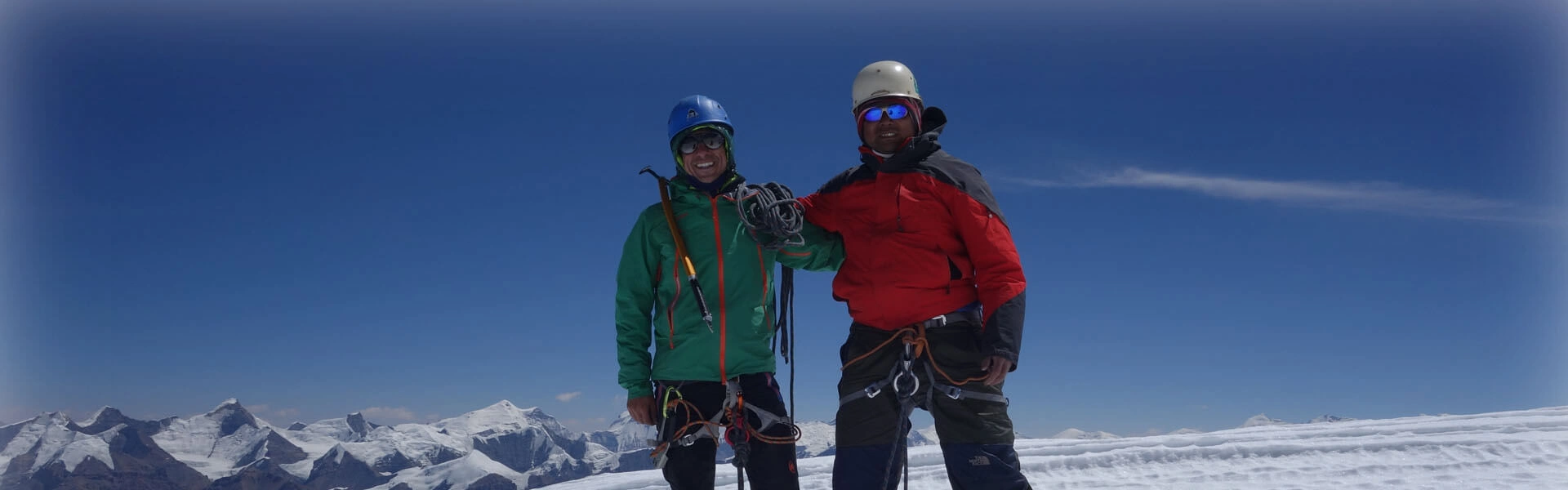
Why Do We Provide Two Climbing Sherpas for One Client on Chulu West?
Many climbers ask why we assign two climbing Sherpas for one client on Chulu West Peak. The answer is simple: safety comes first.
Unlike Mera Peak, Island Peak, or Lobuche East, Chulu West is not a commercial trekking peak with a well-established route every season. The mountain is much more remote, and the climbing route often requires fresh trail breaking, rope fixing, and route finding.
The Challenge Begins Above High Camp
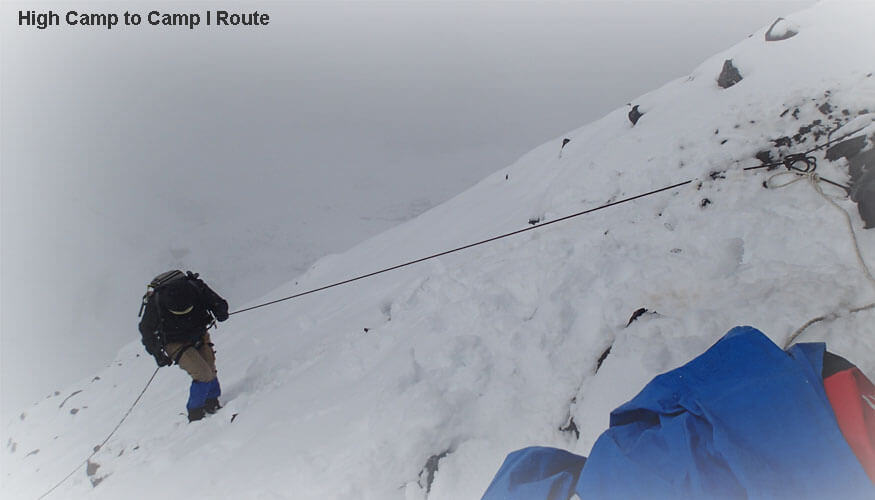
Chulu West Base Camp is located at approximately 4,810 meters. High Camp is around 5,100 meters. Most local porters are comfortable carrying loads up to about 5,000 meters, and only a few continue to High Camp. They normally do not spend the night there and return to Base Camp or Ledar on the same day.
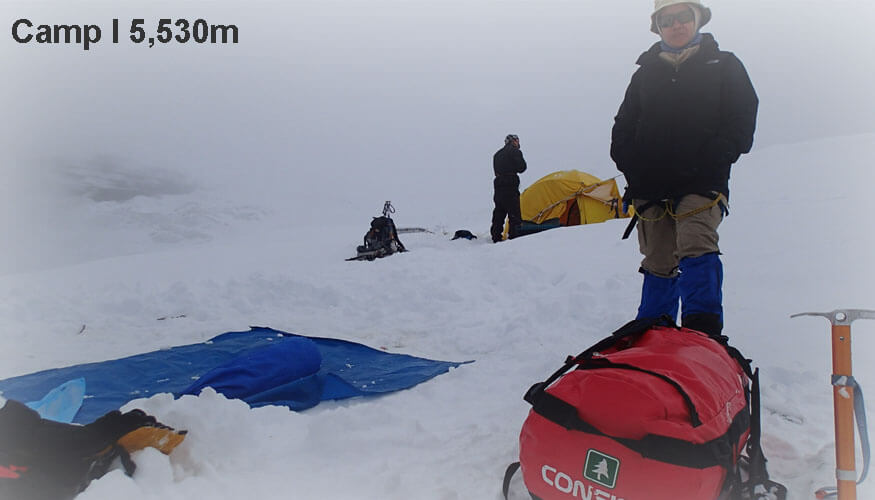
From High Camp to Camp 1 (approximately 5,530 meters), the terrain becomes much more technical. This section often requires fixed ropes for both ascending and descending. All climbing equipment, including ropes, snow stakes, and technical gear, must be carried by the climbing Sherpas.
Carrying this heavy equipment through steep terrain is one of the hardest parts of the expedition. When two Sherpas work together, they can share the load, fix the route more efficiently, and support each other throughout the climb.
Camp 1 to the Summit
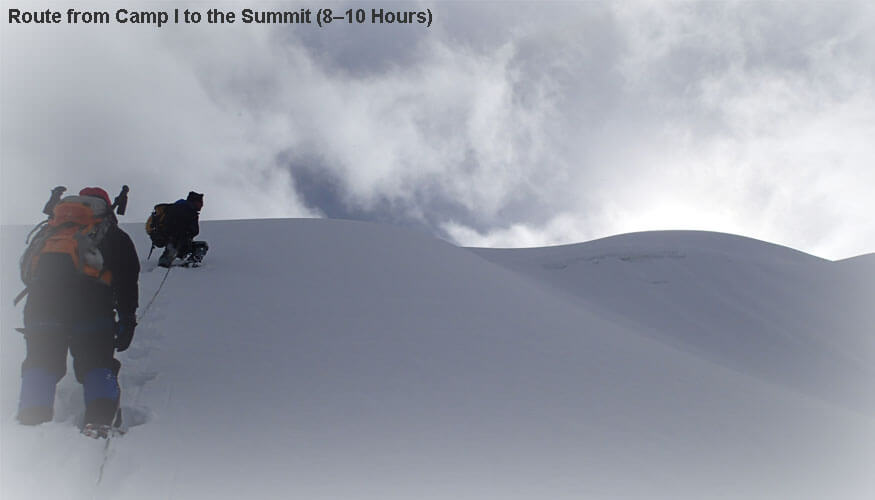
The climb from Camp 1 to the summit is not extremely steep for most of the route, but it is physically demanding. After fresh snowfall, there is usually no established trail, and the lead Sherpa must spend 8 to 10 hours breaking trail through deep snow while carrying ropes and safety equipment.
The route also crosses glacier terrain where hidden crevasses may exist.
Several years ago, one of our lead Sherpas fell into a hidden crevasse while opening the route. Fortunately, another Sherpa was there to perform the rescue. This experience taught us an important lesson: one Sherpa alone is not enough for this mountain.
After discussing this with our experienced climbing guides, we decided that every Chulu West summit attempt would be supported by two climbing Sherpas, even if there is only one client.
Why Two Sherpas Make the Climb Safer
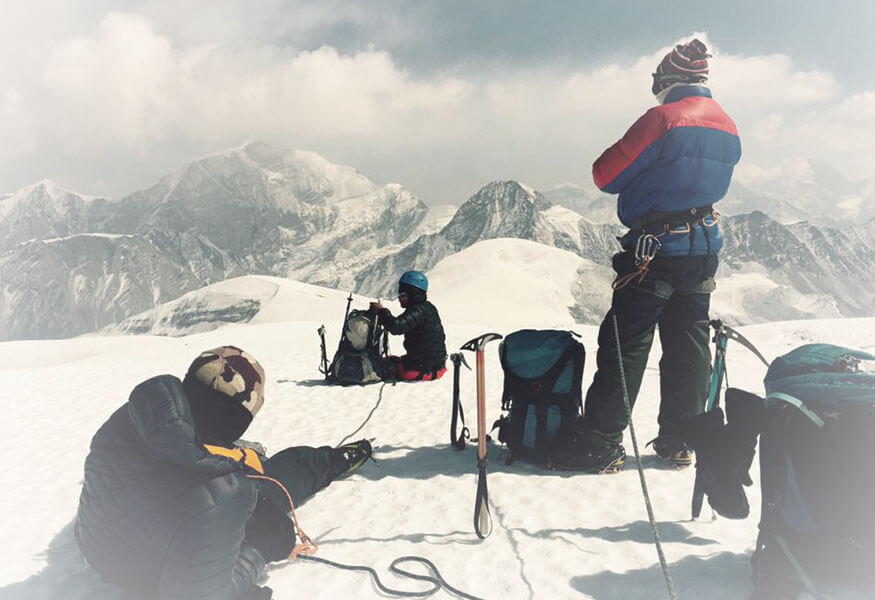
Having two climbing Sherpas provides several important advantages:
- They can share the heavy climbing equipment.
- They work together to fix ropes safely.
- They support each other while breaking trail through deep snow.
- They can immediately assist in the event of a crevasse fall or emergency.
- They greatly improve the safety of both the client and the expedition team.
This decision is based on real experience in the mountains, not simply company policy.
The Current Summit Situation
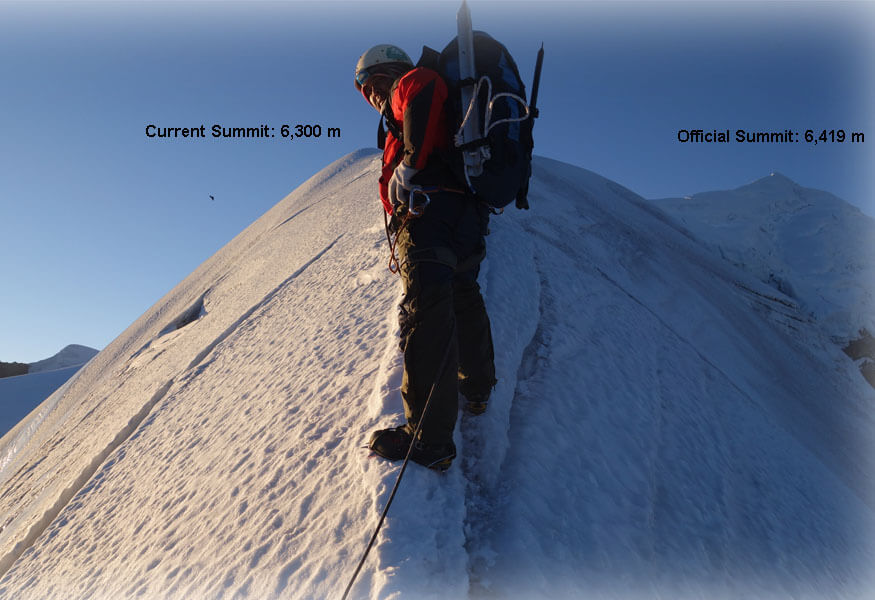
In recent years, the final section of Chulu West has changed significantly due to global warming.
Many teams now stop at around 6,300 meters, believing they have reached the summit. However, the official summit of Chulu West is 6,419 meters.
From Camp 1 at approximately 5,530 meters, climbers ascend nearly 800 meters through deep snow before reaching about 6,300 meters. By this point, most climbers are already exhausted after hours of breaking trail.
The final 120 meters consists mainly of steep rock with very little snow cover. Reaching the true summit requires additional technical climbing, and many teams decide to turn around at 6,300 meters.
We always explain this situation honestly to our clients before the expedition. Our goal is to help climbers reach the highest point possible while always putting safety before the summit.
We hope that future winters will bring enough snowfall to once again cover the rocky upper section and restore the classic snow route to the true summit of Chulu West.